


Johanna ViglHere, plants take on vibrant colors
With her vibrant botanical colors, Johanna Vigl uniquely blends art, nature, education, and entrepreneurship.
From the plant to the paintbox
Johanna’s journey began with the question of how to use materials more mindfully. Today, this has evolved into a creative practice featuring her own paint palettes, workshops, and a deep exploration of plant ethics. Some creative paths arise from a clear decision. Others grow slowly, almost unnoticed, until one day they reveal their direction—as in the case of Johanna Vigl.
More Than a Daydream
Even as a child, Johanna had a vision of herself in a studio under a gable, surrounded by greenery, working on children’s books and painting with paints she had made herself. Back then, this vision seemed more like a daydream than a life plan. Her career path initially led her into the classroom. She became a teacher, but the desire to pursue artistic work remained present in the background.
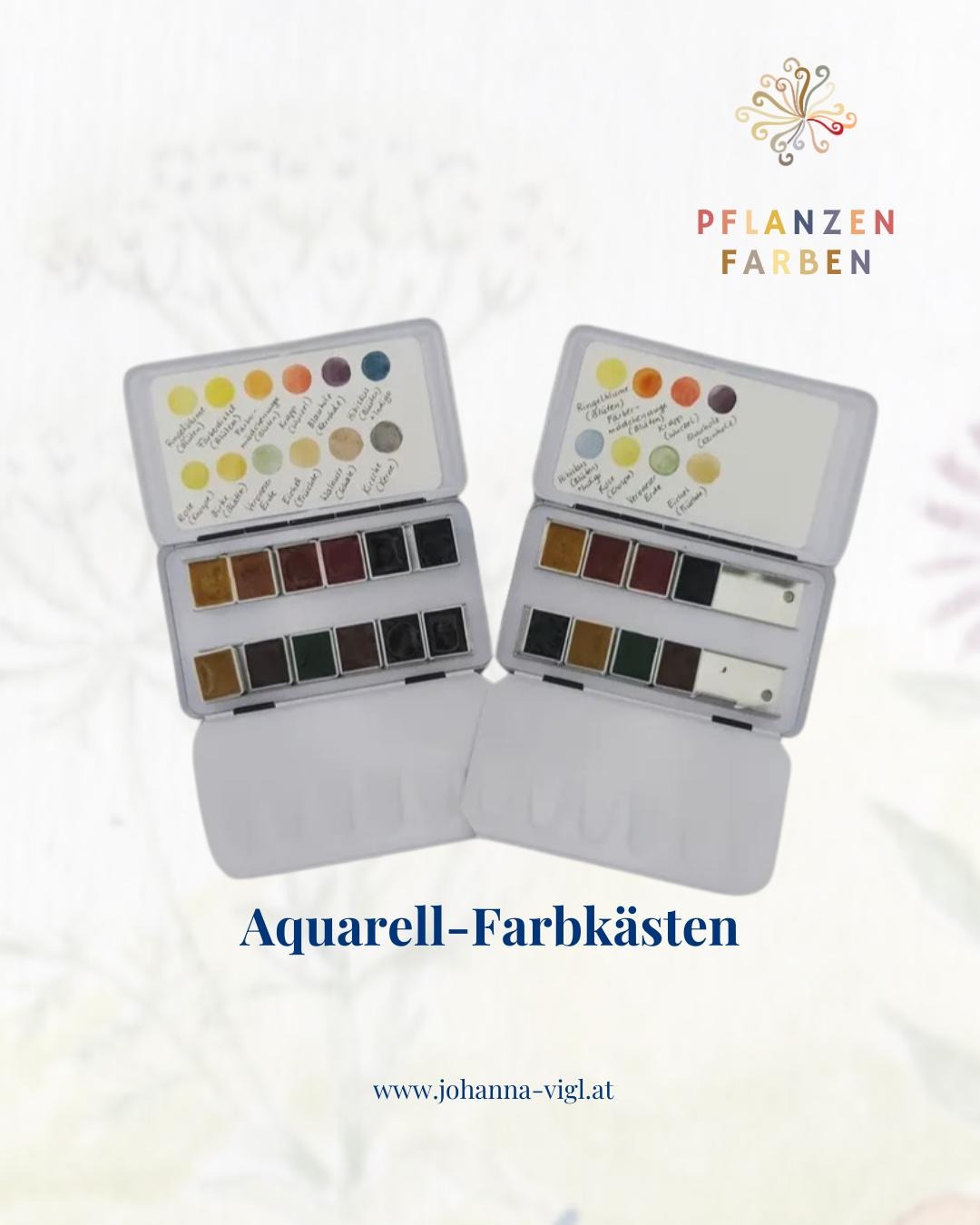
Today, she develops her own plant-based paints, leads workshops for children and adults, is deeply involved in plant ethics, and has launched a paint set featuring vibrant plant-based colors. Looking back on her journey, much of it seems almost inevitable. At the time, however, it was by no means obvious.
The Key Experience in the Classroom
There were a few moments that led Johanna to reflect on colors and materials. Allergic reactions to dyed fabrics, for example. Working with conventional body-painting paints. Or the question of what actually happens when watercolors are used in nature and then wash into the soil with the rain. The decisive impetus, however, came during the first lockdown in 2020. As a teacher, she was looking for ways to bring nature experiences into the classroom despite the lack of available field trip options. To that end, she acquired a paint set containing plant-based dyes and tried it out together with her students. The children’s reaction surprised her.
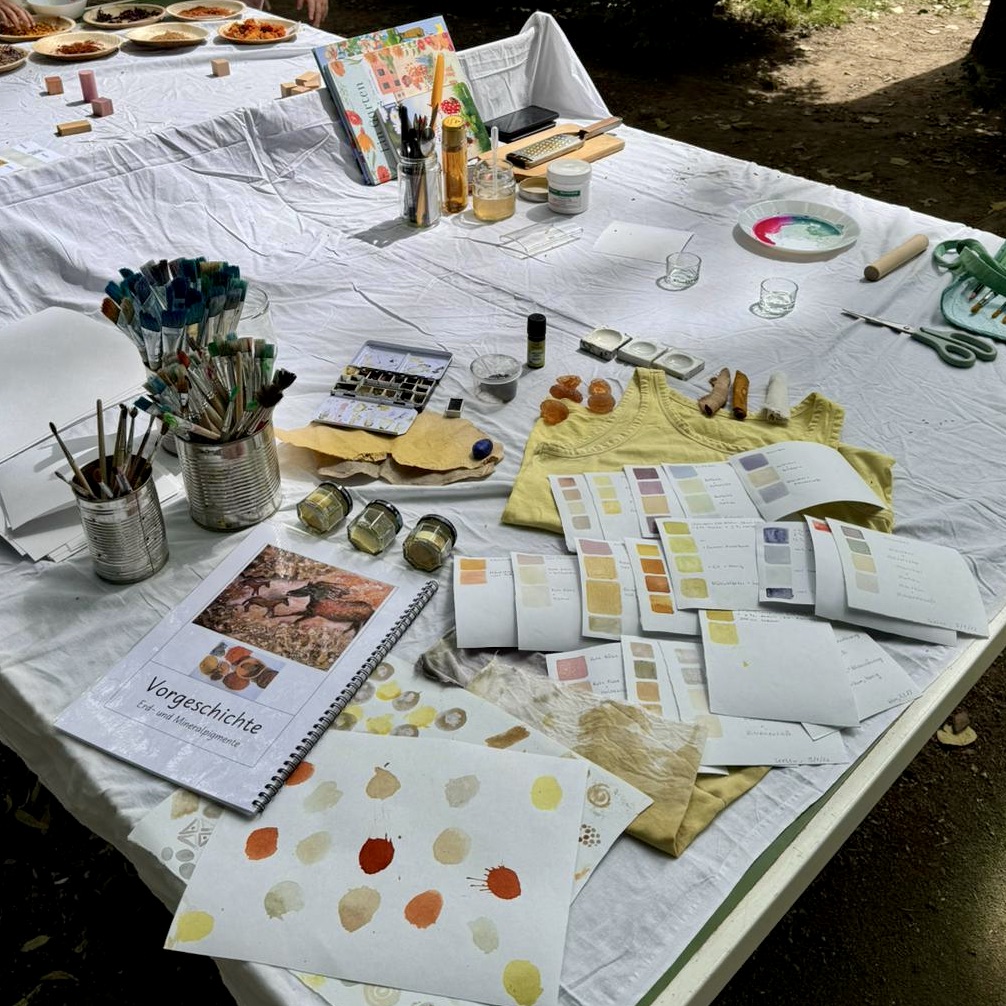
“What, the colors are made from plants?”
Suddenly, conversations about carrots, beets, and currants sprang up. Questions were asked, stories were made up, and imaginations ran wild. Although the children were sitting in a plant-free classroom in the heart of Vienna, the colors opened a window to nature.
“It was amazing and touching how the plant-based paints drew the children and me into nature, its cycles, and its wonders,” Johanna recalls. However, the paints we tested fell short in two respects: They were made from food ingredients and were also significantly paler than the synthetic products we were used to. In the end, the children went back to using the conventional paints. That’s exactly what motivated Johanna even more to make her own paints.
As the daughter of a painting restorer and the granddaughter of a painter, she knew just how vibrant natural pigments could be. She began to research, experiment, and ask herself whether plant-based pigments might not be just as radiant and expressive as conventional pigments.
A path that grows like a plant
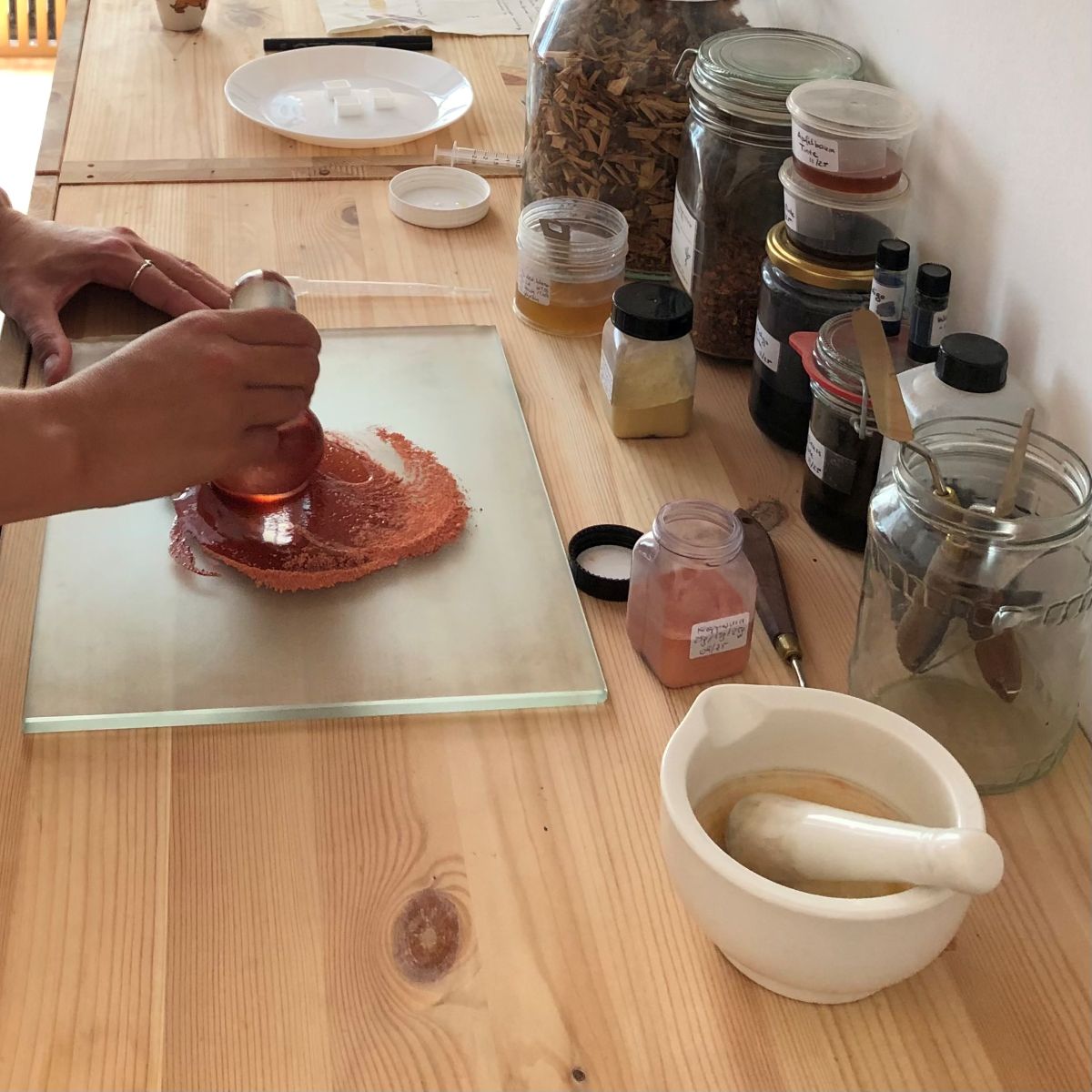
Anyone who listens to Johanna Vigl quickly realizes that she does not view her work as a linear project. Rather, she describes her creative process as something deeply plant-like—open, circular, interconnected, and impossible to plan entirely. To better understand plants as a material, she first completed training in basic botany. Later, she devoted her thesis to the topic of how children can make their own watercolors from wild plants and herbs. In the process, she delved deeply into the history of plant-based pigments.
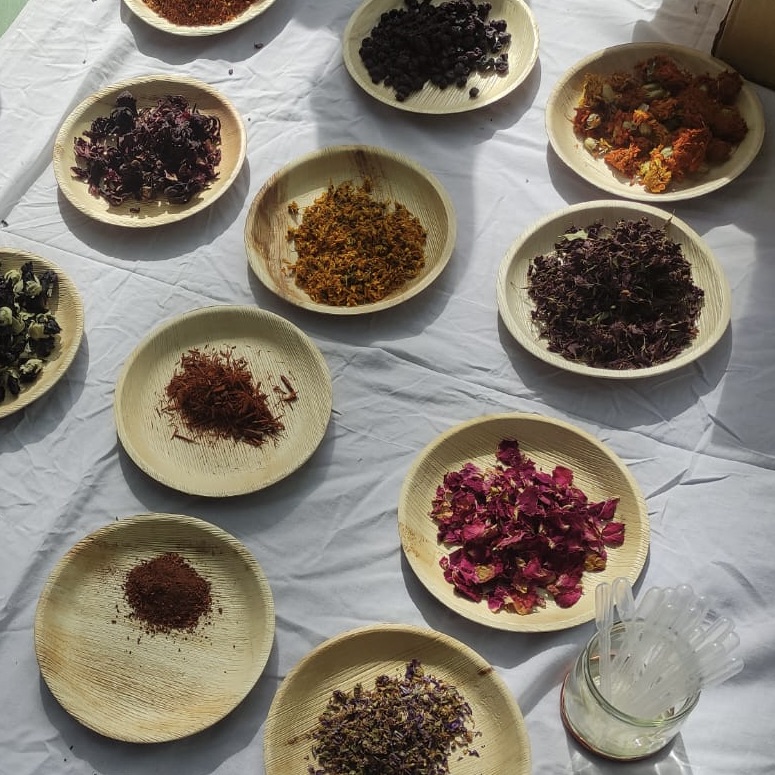
Over many centuries, people around the world have developed an impressive body of knowledge about dye plants. The dyes are often found in places where one would not initially expect them: in roots, seeds, bark, leaves, or flowers.
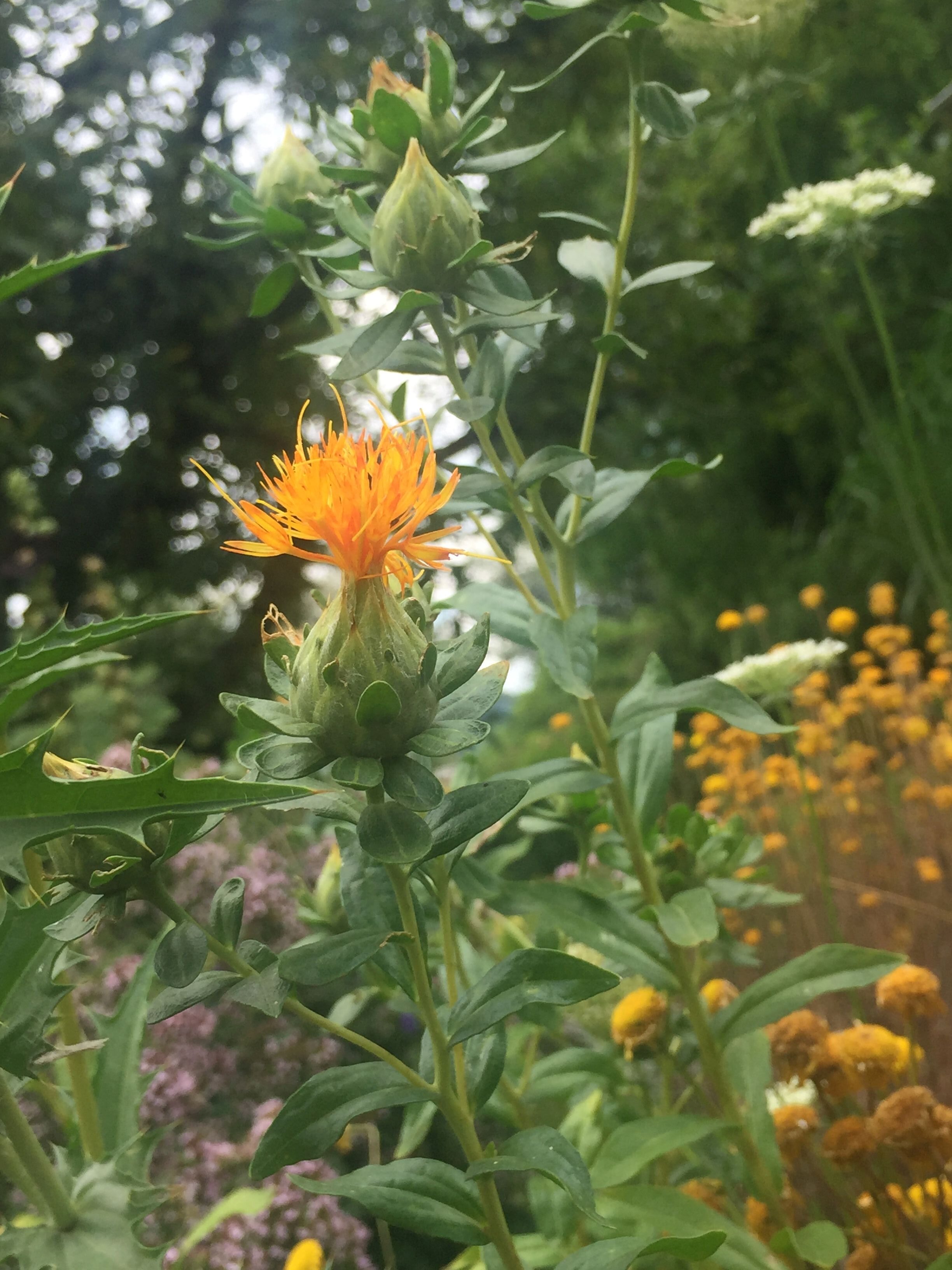
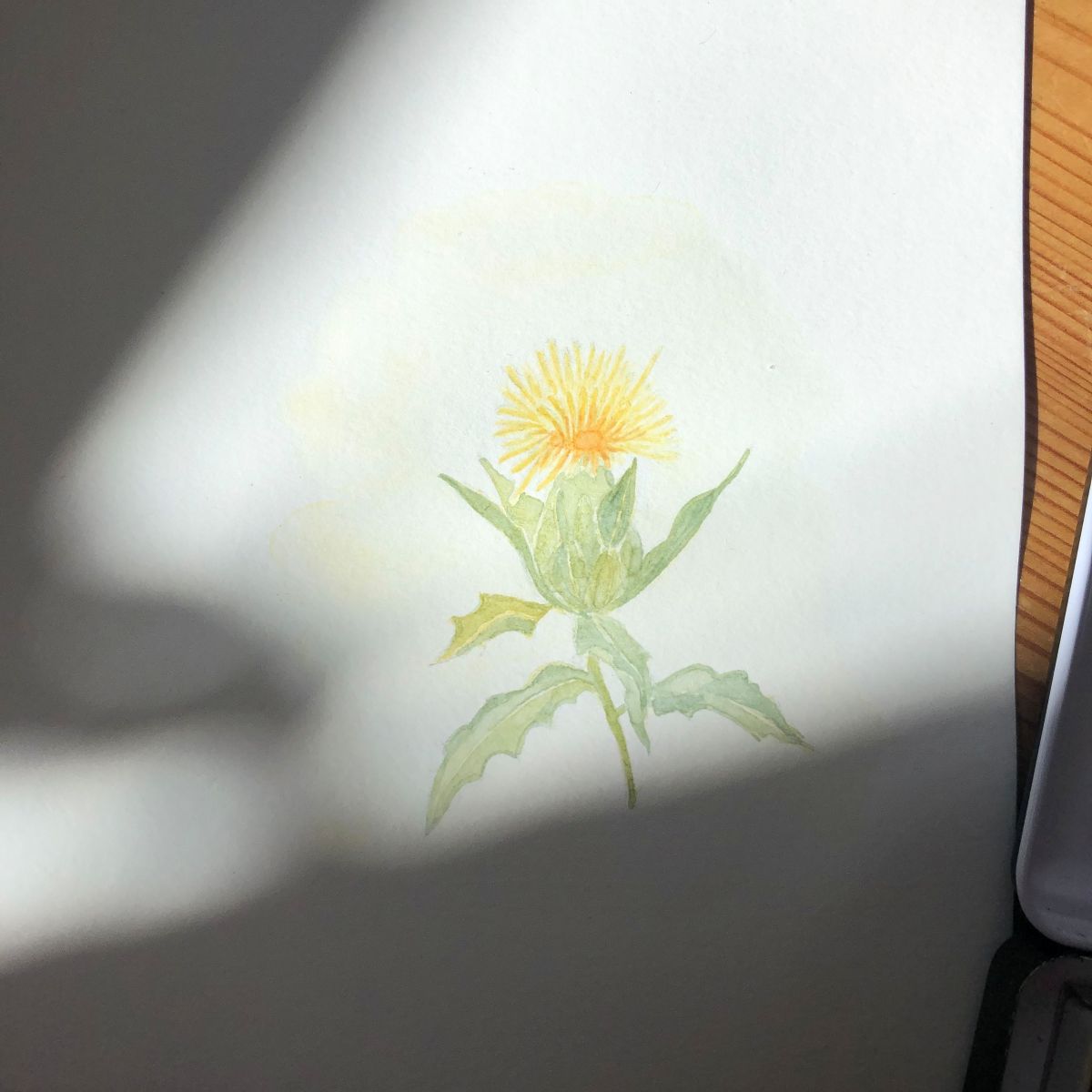
A vibrant red is found in the roots of madder. The safflower yields a warm yellow. Acorns can produce soft shades of brown. Johanna was particularly fascinated by the realization that many of these dyes are invisible as long as they remain within the plant. They are only released through specific processes. Today, she shares this knowledge in workshops. There, children and adults learn, among other things, the technique of cold extraction, which makes it relatively easy to produce plant-based dyes.
At the same time, another aspect of her work began to take shape. A trip to Egypt in 2022 led her to explore questions surrounding sustainable textile production and plant-based dyeing. How could large quantities of organic cotton be dyed without problematic additives? What responsibilities arise when plants are increasingly used as raw materials? These questions sparked a deepening interest in plant ethics, which now also shapes her studies in philosophy.
When the material plays a role in the design
Many creative people talk about how materials influence their work. For Johanna, this idea takes on a special dimension. To her, plants aren’t just resources—they’re living beings with whom she forms a connection.
“The material is not merely a means to a form.”
Johanna Vigl
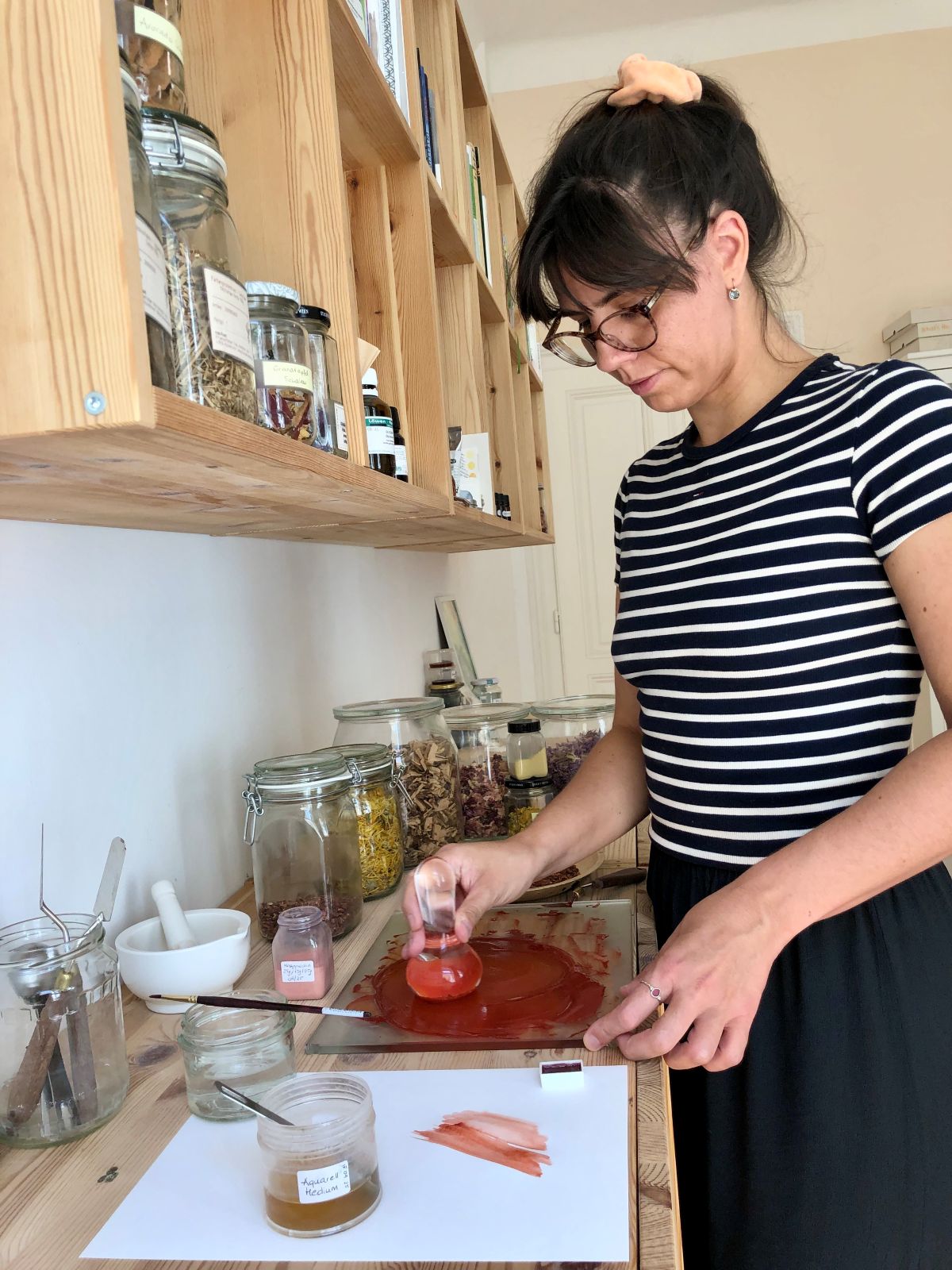
This approach influences nearly every decision she makes in her daily life. It begins with growing and caring for plants, continues through harvesting, drying, and storage, and extends all the way to the design of her workshops. For her, it’s all about mindfulness and cooperation. How do plants react to certain interventions? What conditions promote their growth? What processes emerge when one focuses more on the nature of the material itself, rather than shaping it solely according to one’s own ideas?
For Johanna, therefore, working sustainably means far more than simply choosing an eco-friendly raw material. It’s about approaching the entire creative process with mindfulness, taking a close look, and being open to letting the material itself surprise her. This openness also shapes her artistic practice, whether she’s painting freely or illustrating books. Rather than constantly comparing plant-based pigments to synthetic products, she seeks to reveal their unique qualities. Her colors are not meant to convince by imitating something else, but by showcasing what makes them distinctive.
What Plant-Based Dyes Can Do to People
Participants in Johanna’s workshops rarely go home with just new knowledge about color. Time and again, Johanna observes similar experiences among the participants. There’s a sense of wonder at the vibrancy of the colors. The joy of working with one’s hands, the direct experience of different plant structures, and the surprise at how many shades can be created through small changes—such as in the pH level. Above all, however, she describes a special atmosphere.
Many people say that plant-based pigments have a gentle, opening quality. They describe how they invite a sense of calm and alter one’s perspective. Johanna sees this as an important aspect of her work. For her, it’s not just about painting. It’s also about the relationship with nature, with materials, and with one’s own perceptions.
“I hope that children and adults will come into contact with materials and processes that strengthen their relationship with nature and nurture their environmental awareness,” she says.
Creativity Between Responsibility and Vision
Like many self-employed people, Johanna is familiar with the challenges of running a business. For her, one of the biggest challenges is the responsibility that comes with growth. The larger a project becomes, the greater its impact. This raises questions about ethics, sustainability, and long-term consequences. She is particularly concerned right now with the industry’s growing interest in plant-based dyes.
While she generally welcomes the development of sustainable alternatives, she sees a risk that established networks of small-scale producers could come under pressure.
Her vision is therefore based on cooperative models—structures that strengthen existing knowledge, preserve diversity, and foster collaboration. Despite all the unanswered questions, she looks to the future with optimism. Nature itself provides her with her greatest source of inspiration.
“Plants don’t die immediately when shaded; instead, they keep searching for and finding new ways to reach the light.”
Johanna Vigl
This sentence not only describes plants particularly well, but also creative approaches. After all, sometimes the most exciting things emerge precisely where curiosity, responsibility, and a desire to create come together. Johanna Vigl shows how a simple question about colors can give rise to a creative practice that combines art, education, and sustainability. She also demonstrates the immense potential that lies in taking a closer look at where our materials come from and the stories they tell.