

So that Vienna looks like Vienna—even virtually
How do you turn a digital backdrop into a Vienna that actually feels like Vienna? For the Vienna expansion of “City Transport Simulator,” ViewApp is relying on iconic buildings, a high level of detail, and a collaboration with designer René Andritsch.
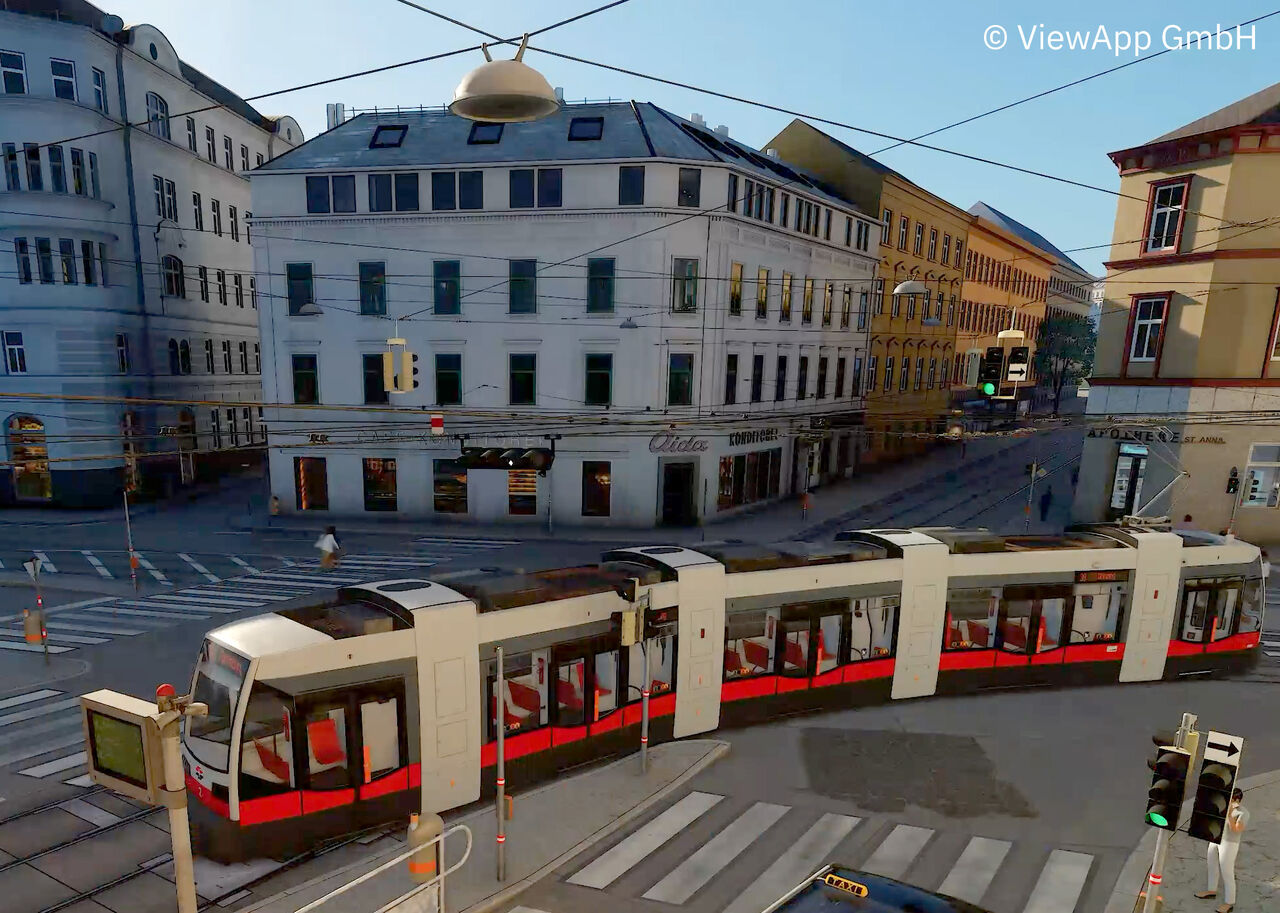
Simply lining up roads, railways, and random buildings isn’t enough to translate a real city into the virtual world. For players to actually recognize Vienna, the game needs the buildings, facades, and details that give the city its identity. The Austrian company ViewApp GmbH is pursuing this goal with its “City Transport Simulator.” Based in Vienna, the company develops realistic traffic simulations for PCs and consoles and has expanded its simulation game to include a virtual version of Vienna.
But attention to detail takes time and resources. An authentic urban environment requires numerous custom-designed 3D buildings. At the same time, the schedule, technical requirements, and quality standards must all align. For some of these buildings, ViewApp therefore brought in freelance graphic designer René Andritsch to provide creative support for the project.
The collaboration began back in 2019
The story behind this collaboration began a few years before the project with a chance encounter. In 2019, René Andritsch and ViewApp founder Daniel Buda both participated in C³, the coaching program run at the time by Kreativwirtschaft Austria. Bringing together diverse entrepreneurs and creatives, facilitating exchange, and fostering new perspectives and collaborations was a central tenet of the program. For René and Daniel, that’s exactly what happened. “When you set a common goal with different people, there are always a few with whom the chemistry is particularly good,” says René.
Although they came from different economic sectors, the two discovered many common interests. Daniel liked René’s graphic design work. Even during his time at C³, they began discussing how René could support the entrepreneur as a designer in building ViewApp. That connection grew into a collaboration and, over the years, a friendship.
From Editorial Design to the Third Dimension
It may seem surprising at first that a graphic designer specializing in editorial design would, years later, be modeling buildings for a traffic simulation game. For René himself, however, it is a logical next step. He has been working as a freelance designer since 1999. Although he still considers editorial design his main focus, he describes himself as a design generalist. His affinity for technology first led him to motion design and eventually to 3D.
René acquired the necessary skills step by step. At first, he worked with Cinema 4D. Later, he looked for a cost-effective way to further develop his 3D skills and began to delve deeply into Blender in 2022. This openness to new tools and technologies would ultimately lead to the expertise that ViewApp needed for its virtual Vienna.
As much detail as necessary, as little as possible
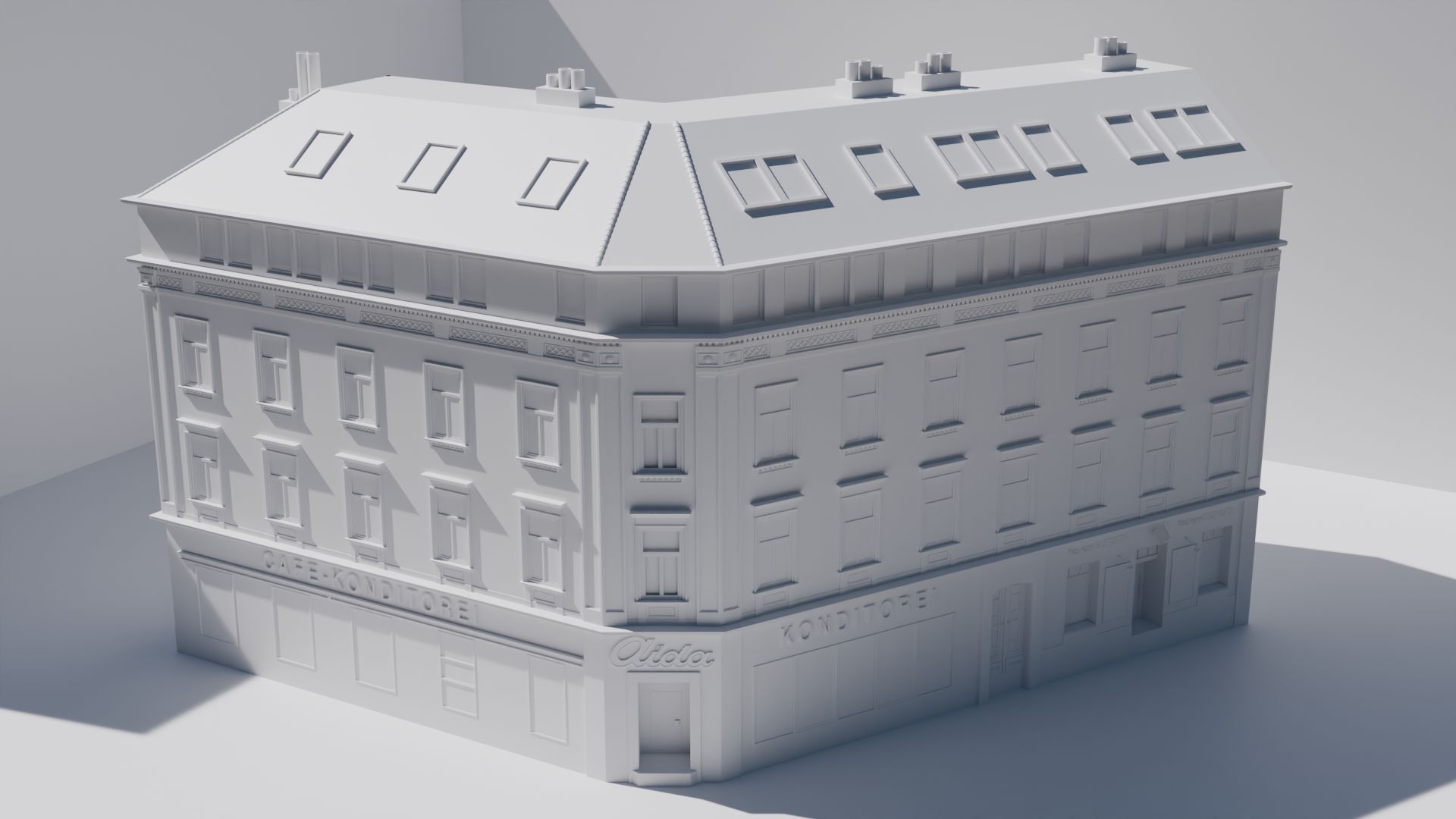
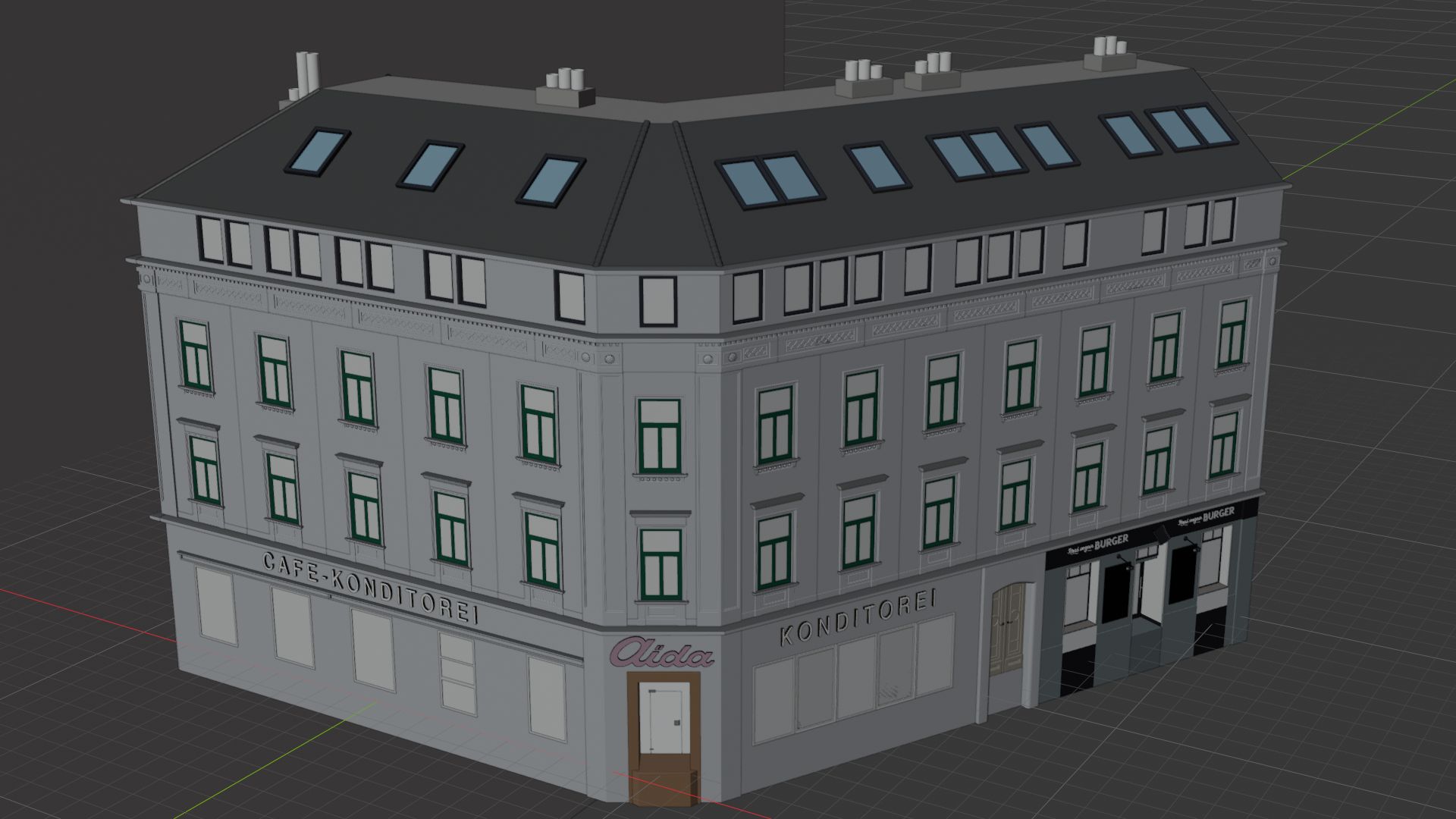
The buildings in City Transport Simulator are reconstructed using photos and original dimensions. The asset development process follows a clear principle. The models are designed to resemble their real-world counterparts as closely as possible while also being technically optimized so that the game runs smoothly on a variety of devices. The challenge lies in striking the right balance between attention to detail and simplification.
At the same time, the work must be extremely precise. Even a small gap within a model can cause unwanted reflections or shadows when light hits it at a certain angle. For buildings consisting of an enormous number of individual elements, this precision becomes both a challenge and a decisive factor in the final result.
Creative Collaboration as a Competitive Advantage
For ViewApp, the value of the collaboration therefore lies not simply in bringing additional capacity to the project. What matters most is the combination of reduced workload, expertise, quality, and reliability. “Working with René has, above all, helped us balance our schedule with our high quality standards,” says Daniel Buda.
By strategically bringing in external expertise, ViewApp was able to distribute tasks among multiple people and lighten the load on its own team. For this to truly be beneficial, however, the external support must understand the project’s creative and technical requirements. Daniel sees exactly this connection in René. “This allowed us to bring important buildings to life with high-quality results while also strengthening planning certainty in the project,” Daniel reports.
This collaboration thus demonstrates very concretely the economic value that creative professionals can bring to development projects. It doesn’t simply create more capacity. In the best-case scenario, it adds additional expertise and new perspectives without having to compromise on quality standards.
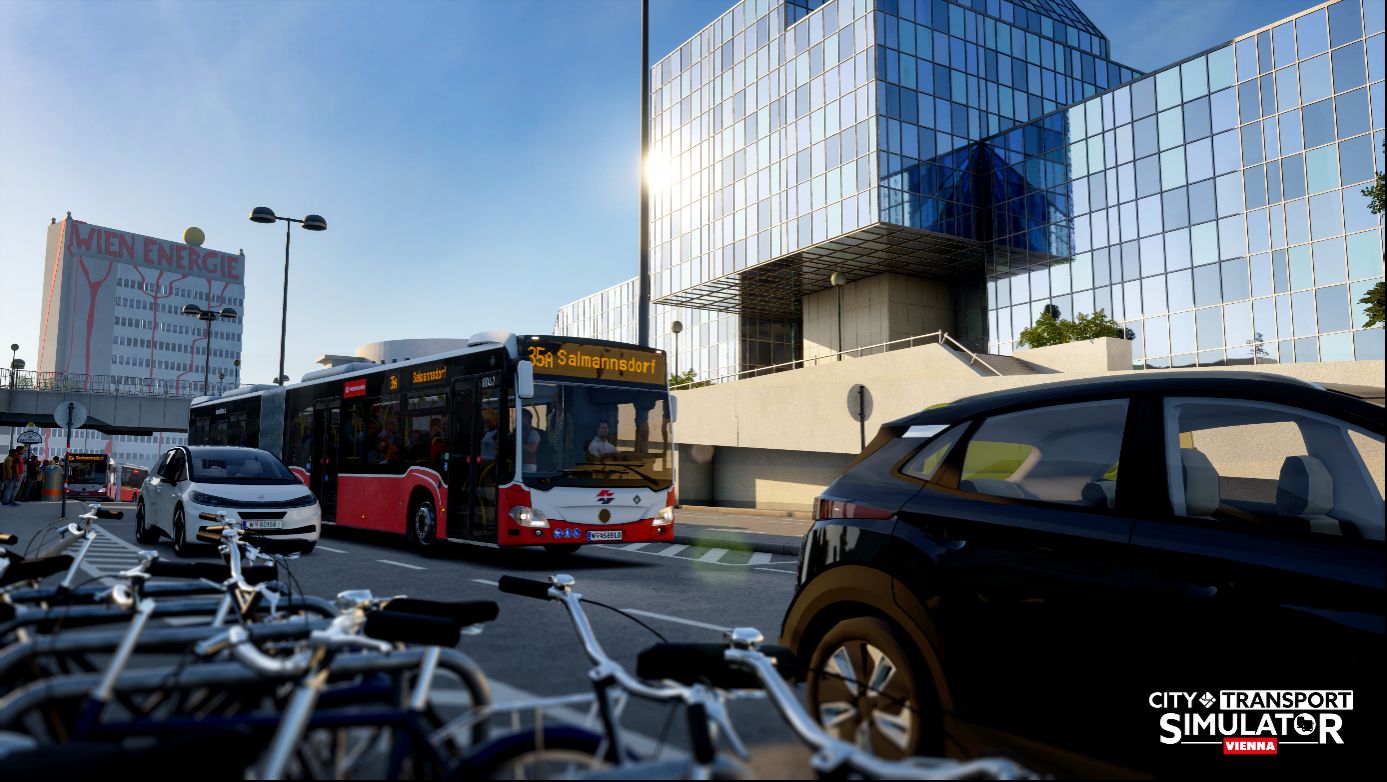
A digital backdrop becomes a familiar urban space
In the finished game, this added value is evident in many details. René worked on distinctive buildings that play a key role in shaping the recognizability of virtual Vienna. After all, when digitally recreating a real city, credibility isn’t created solely by a harmonious overall impression. “The proportions, the facade design, and characteristic details play a major role,” explains Daniel. “When these elements come together, a digital backdrop becomes a familiar urban space.”
The result is therefore more than just decoration. The creative work becomes part of the product experience. Familiar locations help players perceive the virtual environment as believable and immerse themselves more deeply in the simulation.
Bring Creatives to the Table Earlier
This collaboration offers another lesson that can be applied to other companies. Creatives shouldn’t be brought in only when a finished idea is ready to be designed.
“Creative experts can make a vital contribution to a project’s success, since we ask a lot of questions right from the start to get to the heart of the task at hand,” says René. This can also lead companies to take a fresh look at issues that, due to their familiarity, have long been taken for granted internally.
Daniel also sees an important advantage in an outside perspective. External creatives bring their own experiences to the table, ask different questions, and challenge existing approaches. That’s why it’s particularly valuable to start exchanging ideas as early as possible. Then creative ideas, technical possibilities, and time constraints can be considered together. For Daniel, the collaboration with René exemplifies what can come of this: “Different professional perspectives complement one another, and a shared commitment to quality yields results that enrich the entire project.”
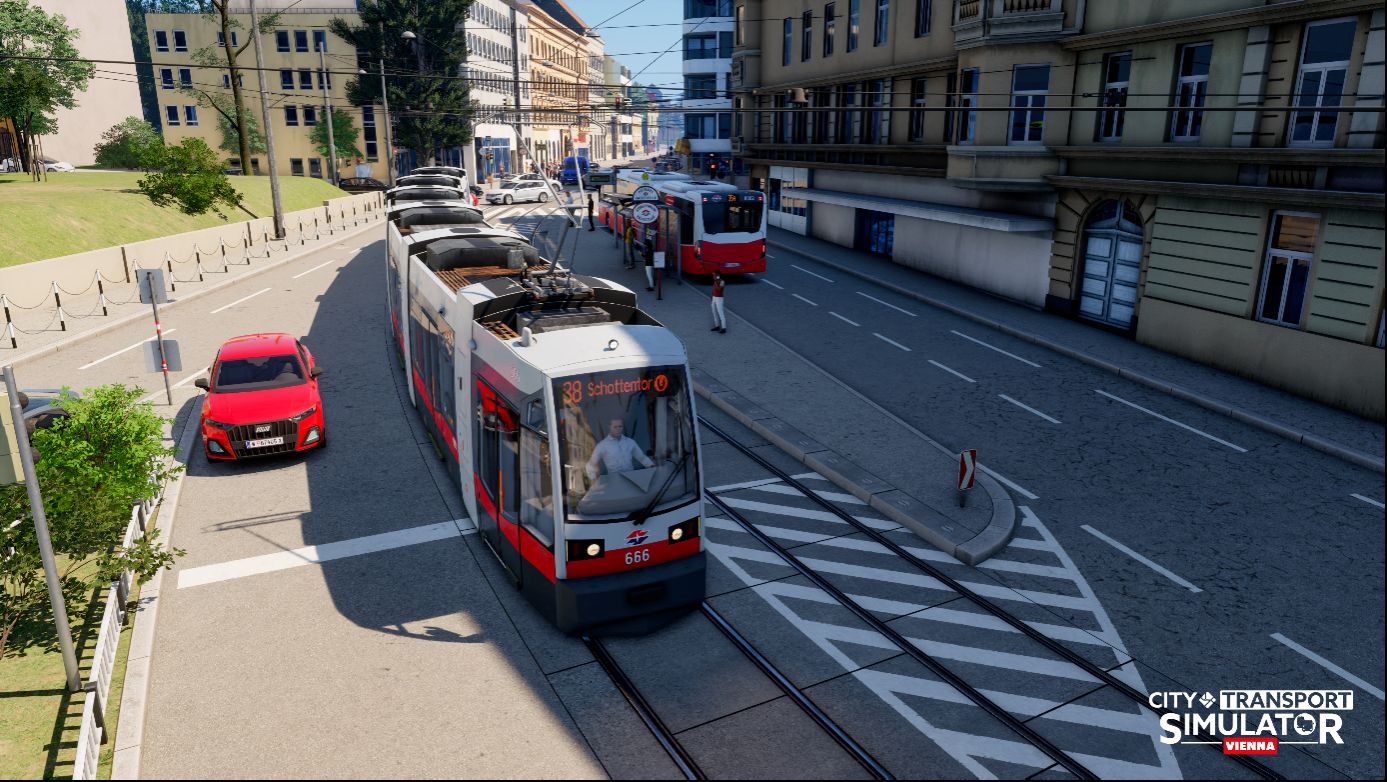
Networking Can Lead to Something New
The fact that René Andritsch is now working on ViewApp’s virtual Vienna wasn’t part of the plan when they first met in 2019. That’s precisely what makes this story so compelling. Networking doesn’t automatically lead to collaboration. But it creates the encounters from which collaboration can emerge. C³ brought together an entrepreneur from the field of simulation development and a designer. Through their exchange, trust was built and initial ideas took shape. Years later, their expertise complements each other in a project that benefits both parties.
Meet René Andritsch at the Creative Transformation Summit 2026
Anyone who would like to meet René Andritsch in person and apply his creative perspective to their own business will have the opportunity to do so at the Creative Transformation Summit 2026 on November 19.
At the Creative Fair, entrepreneurs can bring specific questions about their own businesses to René and work with him to gain a fresh perspective on them.
Perhaps the next collaboration will begin there—with a conversation where the chemistry is just right.