
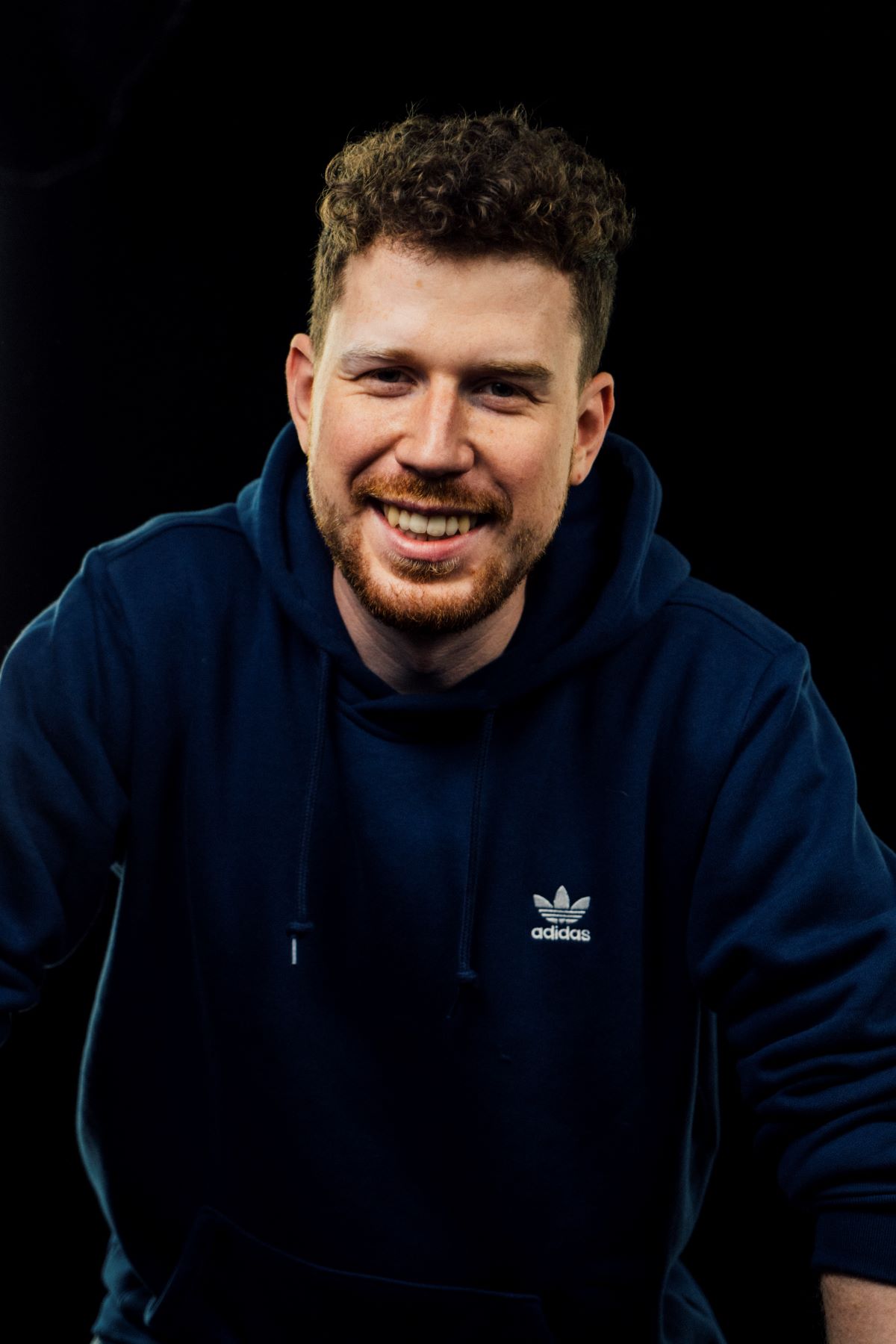
Peter JablonowskiWithtime lapse to Emmy nomination
Peter Jablonowski explains how he made it to the 2026 Sports Emmys with his agency FilmSpektakel.
International recognition
The fact that an Austrian creative studio has received multiple nominations at the 2026 Sports Emmy Awards is anything but a matter of course. For Peter Jablonowski, co-founder of the Viennese film production company FilmSpektakel, these nominations mark a special moment, not only as personal recognition, but also as visible proof that creative excellence from Austria can hold its own internationally.
Specifically, FilmSpektakel was honored for two very different productions:
The opening film of the French Open “A Parisian Rhythm with Omar Sy” received nominations in the Outstanding Sports Camera Work and Outstanding Sports Editing categories. In addition, the NBA All-Star production “The Bay” was nominated in the Outstanding Sports Editing category. The agency thus received the remarkable double nomination in Editing.
This is a milestone for a small, highly specialized team from Vienna. For Peter, it is above all the consequence of a path that he has been pursuing for over ten years.
Personal projects as a starting point
The origin of this international visibility lies not in classic acquisition or strategic networking, but in the joy of experimenting. From an early stage, FilmSpektakel focused on repeatedly realizing its own projects as a creative laboratory, but also as a statement, in addition to commissioned work.
This attitude gave rise to the “A Taste of” timelapse series, starting with A Taste of Austria and Vienna, later followed by cities such as New York, Los Angeles and London. The films were viewed millions of times, went viral on social networks and developed a clear visual signature: precisely composed time lapses that both show cities and bring them to life.
At some point, this work did not go unnoticed outside Europe. A producer from Warner Bros. came across the films and contacted FilmSpektakel directly. This led to a collaboration with TNT Sports and ultimately to the company’s entry into major international sports productions.
“Personal projects that you put real passion into are often the best calling card,” says Peter looking back.
Two productions, one clear visual approach
The two nominated projects differ in terms of setting and mood, which is precisely why they demonstrate the breadth of FilmSpektakel.
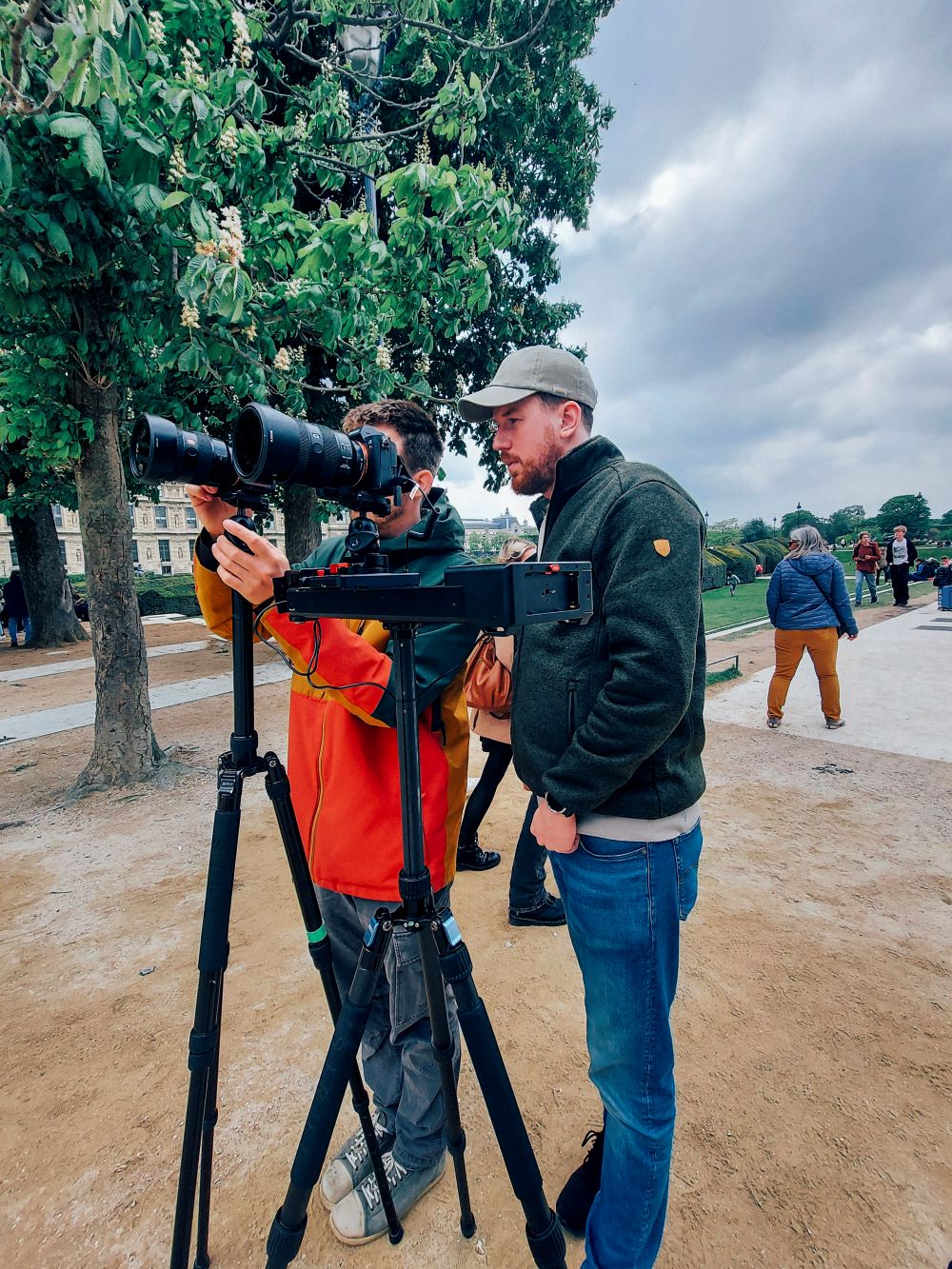
For the first broadcast of the French Open on TNT Sports in the USA, “A Parisian Rhythm with Omar Sy” was created as an opening film that goes far beyond classic sports images. The aim was to combine the rhythm, elegance and special atmosphere of Paris with the Grand Slam tournament. To achieve this, the team spent ten days traveling around the city, producing time-lapse footage in a wide variety of locations, which was later integrated into a cinematic narrative arc.
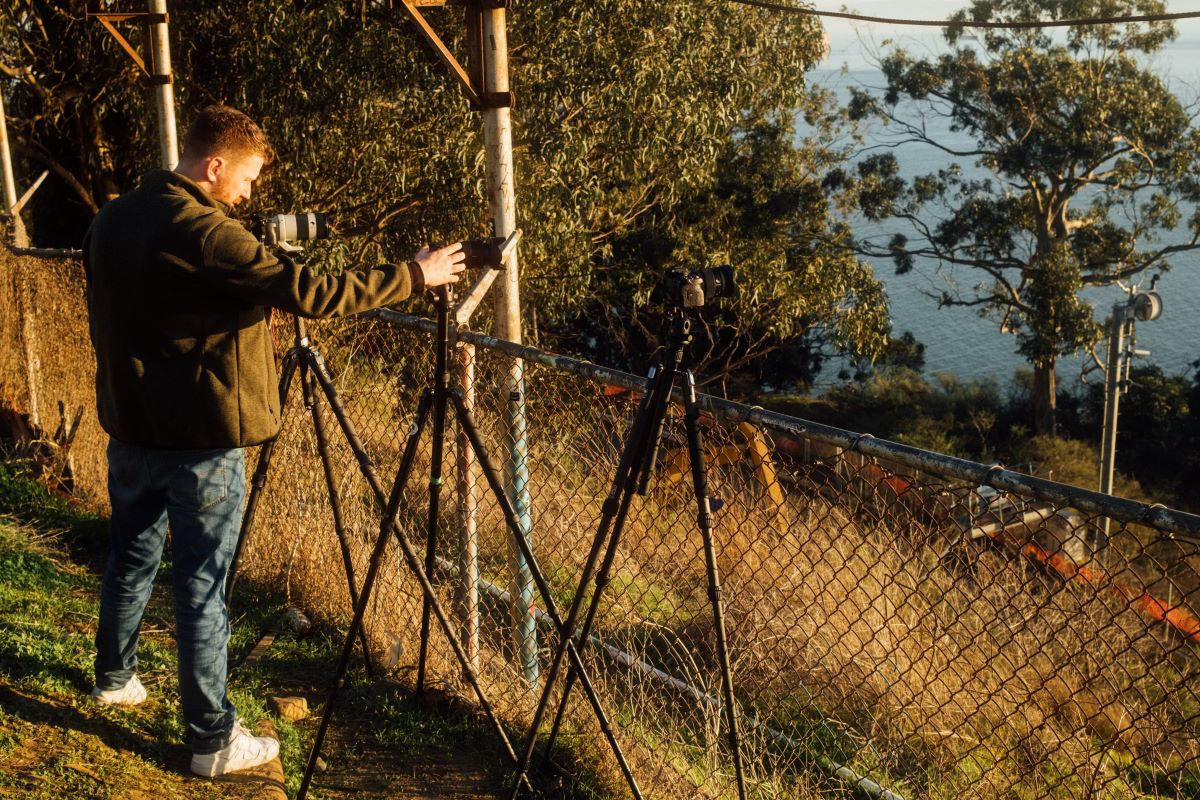
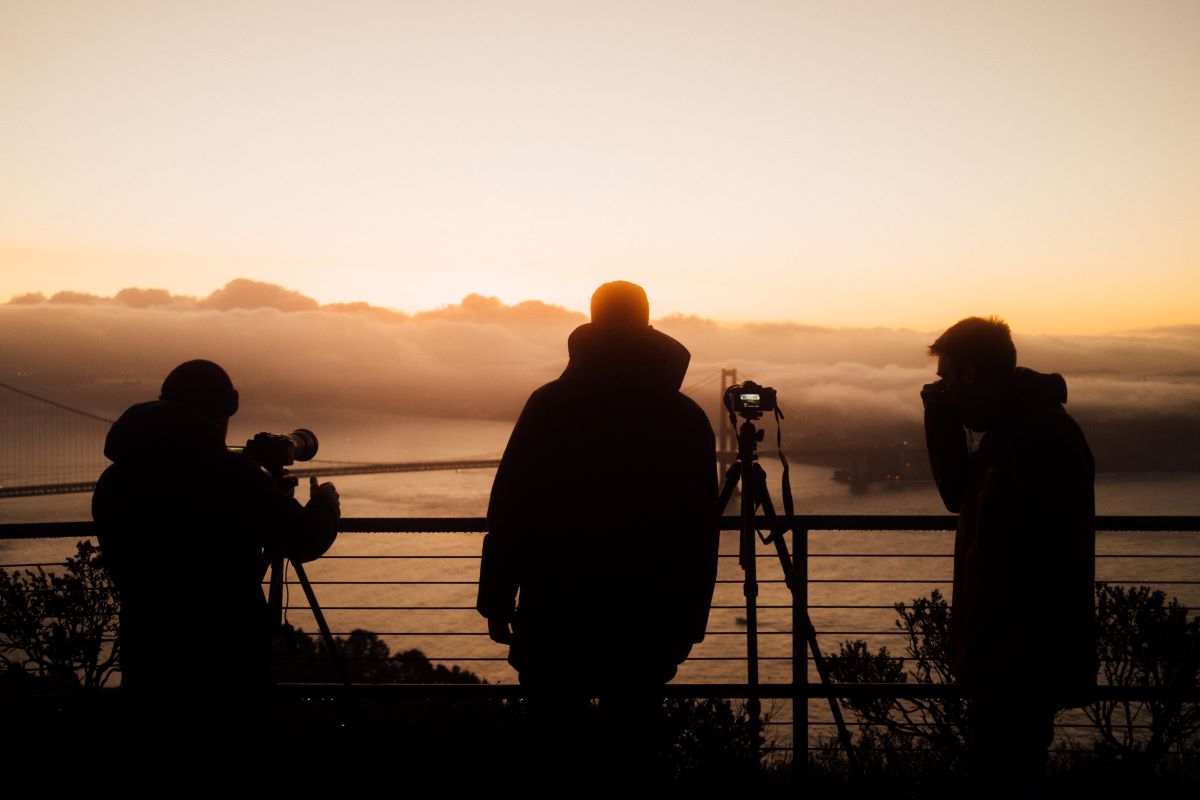
The work on “The Bay”, the visual bracket around the NBA All-Star Weekend 2025 in San Francisco, was completely different. The focus here was on energy, urbanity and speed, i.e. images that convey the dynamics of the city and were present in trailers and intros throughout the weekend.
The fact that both productions were nominated in the Outstanding Sports Editing category underlines the particular strength of FilmSpektakel: using time-lapse not as an effect, but as a narrative tool.
Precision, calm and a small team
Time-lapse photography is often seen as a decelerated discipline. In reality, it is the opposite, especially in the context of international sports productions. Each shot consists of thousands of individual images taken over a period of hours. Mistakes can hardly be corrected, repetitions are rarely possible.
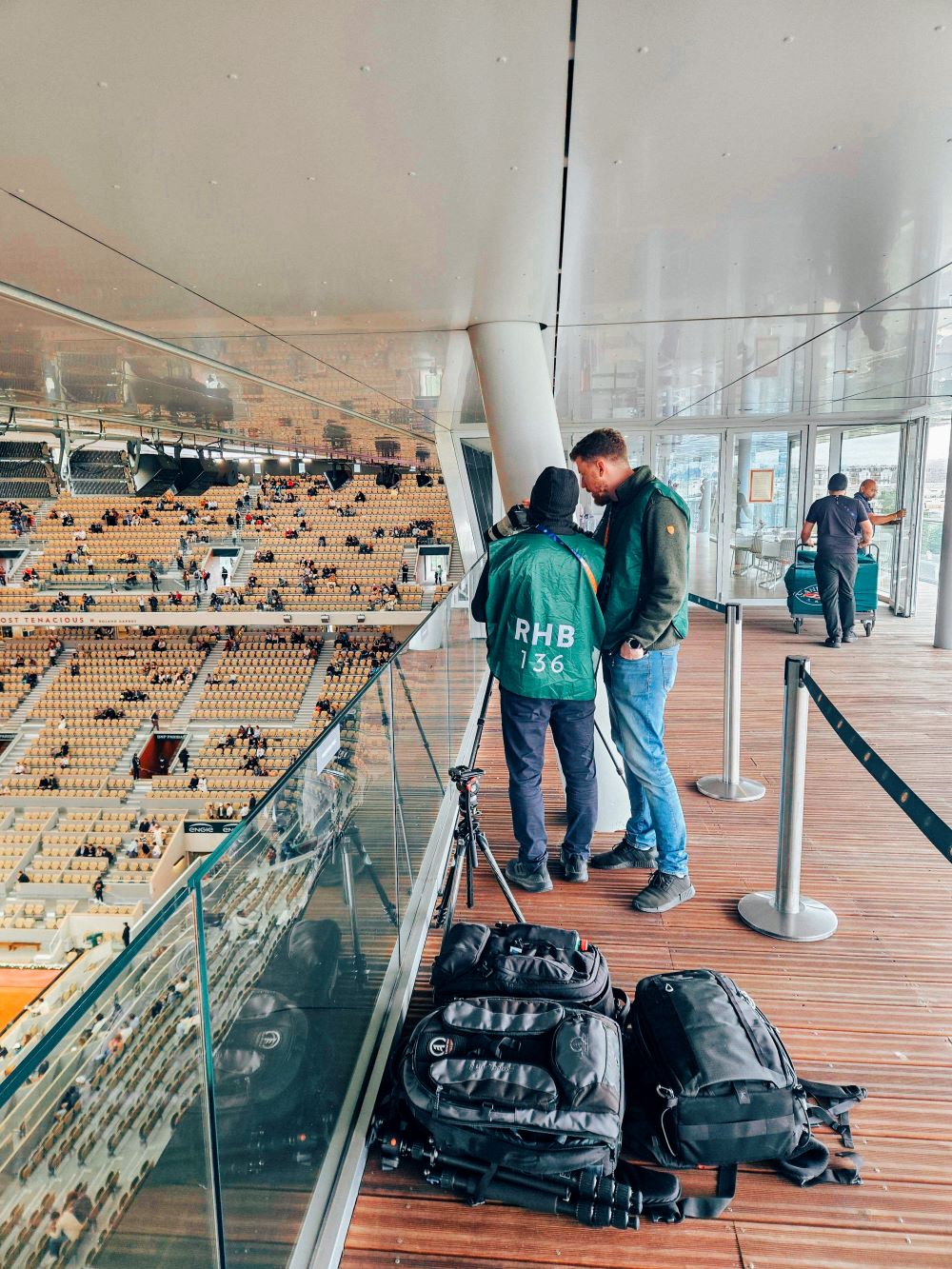
This challenge was particularly evident at Roland Garros. During the first days of the tournament, time-lapse footage was shot in and around the stadium, which TNT Sports wanted to integrate into the ongoing coverage as quickly as possible. This meant viewing, sorting, editing and cutting material, often overnight.
In order to meet such requirements, FilmSpektakel relies on a working method that combines precision and calm. The basis for this is extremely detailed pre-planning: sun positions, light patterns, movement patterns of people or traffic are analyzed in advance in order to know as precisely as possible what will happen and when. Tools such as PhotoPills or Google Earth are just as important as years of experience in scouting.
Another key aspect is equipment redundancy. With time-lapse recordings that last several hours, a flat battery, a faulty memory card or a technical problem can ruin the entire shoot. That’s why FilmSpektakel works consistently with backup systems: additional batteries, spare cameras, double data backup. This minimizes risks before they even arise.
Despite this meticulous planning, flexibility remains crucial. Shoots often take place in public spaces, under changing conditions. Light changes, the weather changes, people move unpredictably. If you get hectic at such moments, you lose.
“A hectic pace leads to mistakes and with our type of work, you don’t get a second chance.”
Peter Jablonowski
For him, calmness is not the opposite of speed, but a prerequisite. Part of the FilmSpektakel concept is to work in a small core team of four people. Decisions can be made quickly, processes are clear and responsibilities are unambiguous. For larger productions, the company works with freelancers on a project-by-project basis without losing the agility that is crucial for international sports productions.
Peter’s tips for creatives: what really opens doors
The Emmy nominations are a high point, but Peter remains deliberately realistic when it comes to growth and success.
“It took over ten years from the first Viennese Timelapses to the Sports Emmy nomination.”
Peter Jabloniwski
His most important learnings for other creatives:
- Specialize. You can become truly excellent in a niche and that is exactly what international customers are looking for.
- Show your work. Personal projects are often the best form of acquisition. They show what you can do without the restrictions of a customer briefing.
- Stay patient. Growth doesn’t happen overnight. And that’s okay.
- Surround yourself with the right people. Without my co-founder Thomas Pöcksteiner, FilmSpektakel would not be what it is today. We complement each other perfectly and that is priceless.
Continue at your own pace
The fact that a small studio from Vienna is responsible for productions relating to the NBA and the French Open shows the potential of consistent creative work. FilmSpektakel is not a product of chance, but the result of focus, passion and the courage to go one’s own way. Or, as Peter himself puts it:
“We didn’t set up FilmSpektakel to build a business, but because we love this kind of filmmaking. And you can feel that in the process and in the result.”
We’re keeping our fingers crossed for the Emmys!