
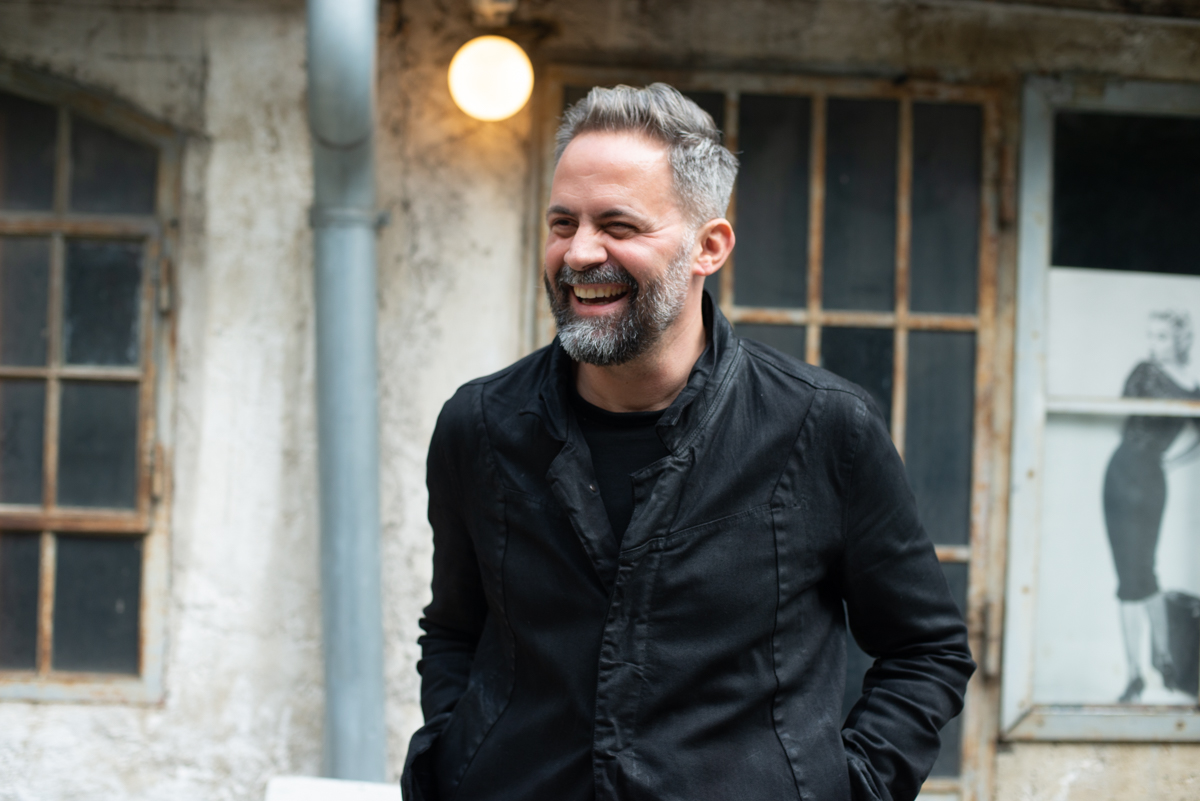
Ulrich DrechslerThemusician who composes entire systems
What happens when an internationally acclaimed musician decides to “freeze” his career in order to completely rethink it? In Ulrich Drechsler’s case, this moment led to a radical change of perspective and ultimately to the founding of the Orbital Nation Association (ONA), an interdisciplinary movement between space, society and music. A creative of the month who thinks beyond genre boundaries.
From musician to systems thinker
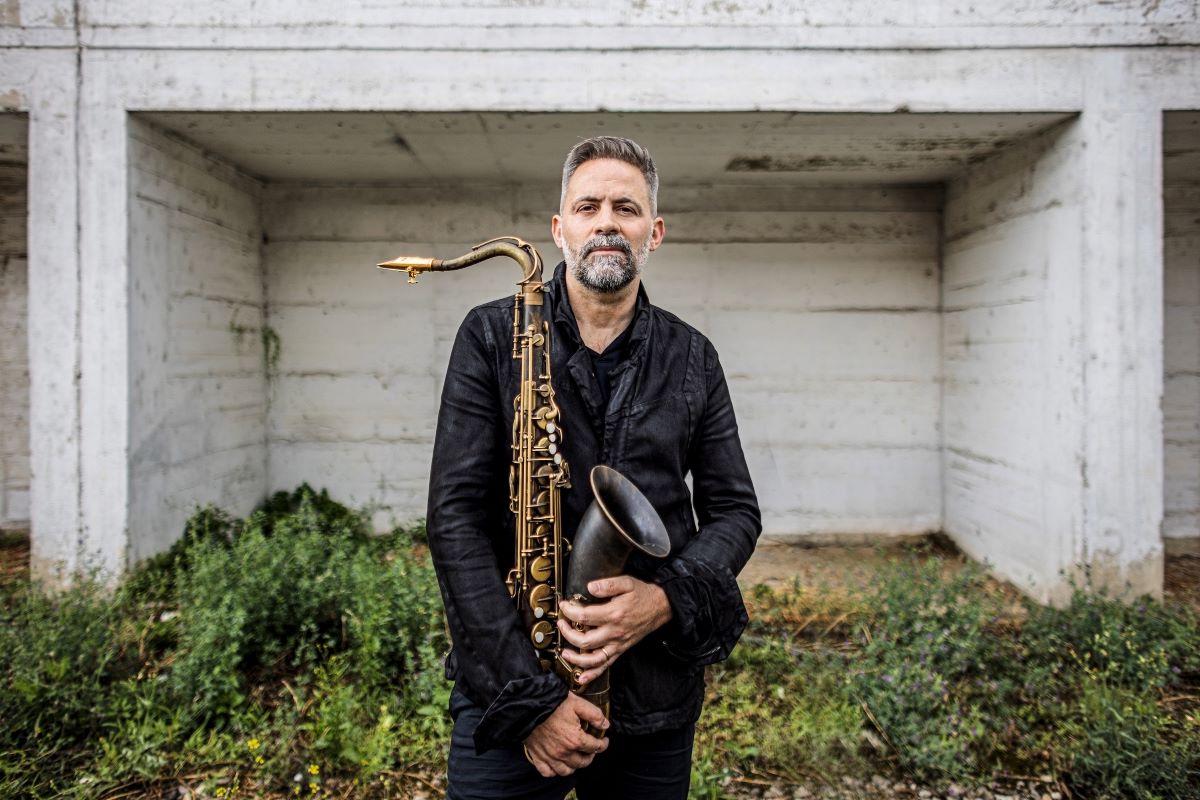
Ulrich Drechsler, musician, composer and part of the C hoch 3 community, reached a point two years ago where he felt that he could not carry on as before.
The music industry, his home for almost five decades, is changing rapidly. Digitalization, AI, monopolization, an ever-increasing devaluation of music as a cultural currency. For many, this would have been a reason to fight on or slowly retreat. Ulrich took a different path. He froze his successful career. And then came Reanne Leuning. Reanne Leuning builds bridges between creative minds worldwide at Kreativwirtschaft Austria and is responsible for the BOLD Community (Opens in a new tab or window).
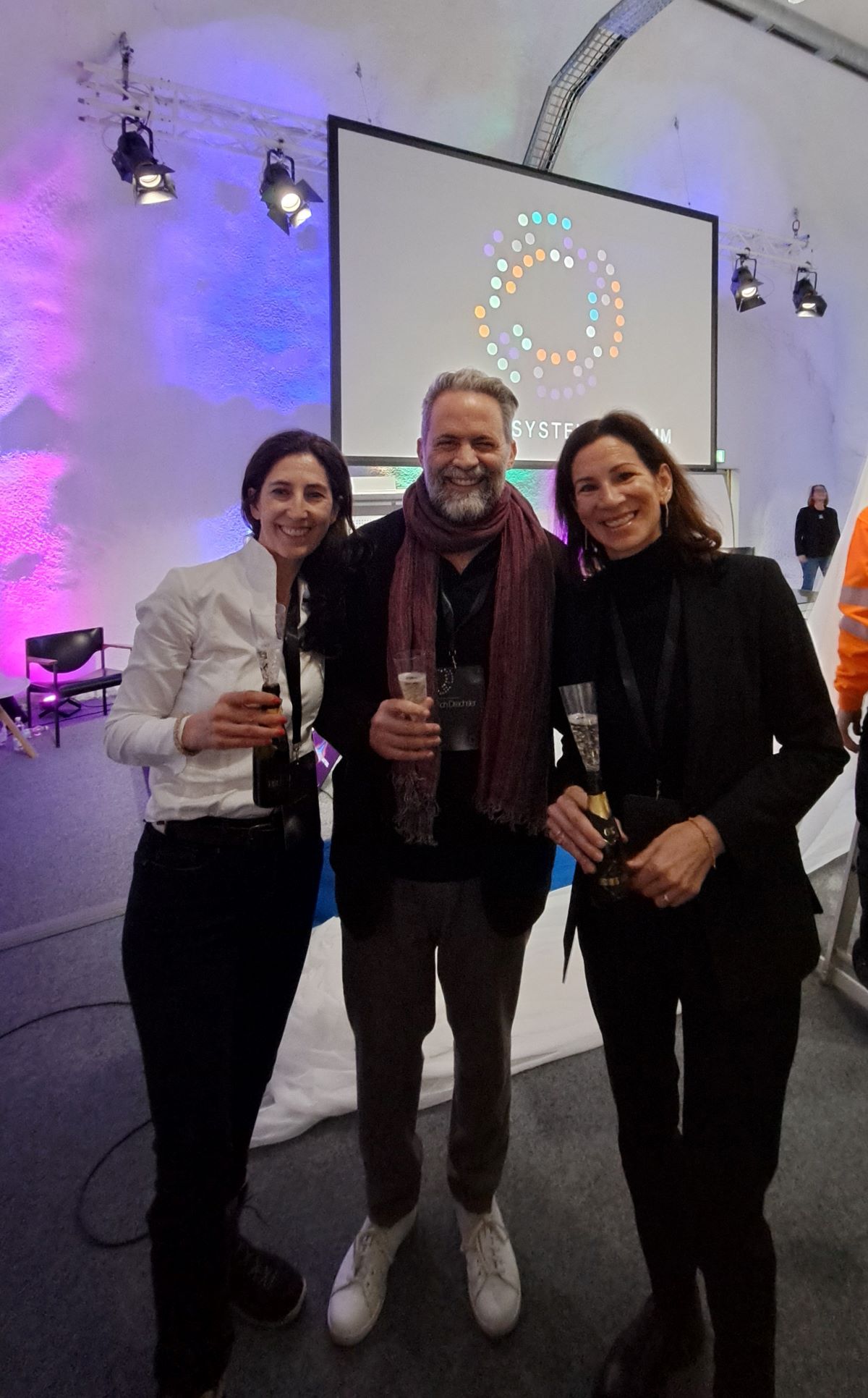
After an intensive initial discussion, she invited him to join the BOLD Community, a global network for bold ideas across industries and disciplines. Around 50 people from all over the world came together for the BOLD UnConference, where Ulrich met someone from the space sector for the first time. “An absolutely unknown, fascinating world opened up for me,” he says. This was followed shortly afterwards by another invitation to the World Systemic Forum in Liechtenstein, organized by the Hilti Foundation. There, Ulrich took part in a workshop organized by the Space Working Group alongside experts from the fields of space economics, human space supply, science, technology and law. And in the middle of it all: musician Ulrich Drechsler. Something that would be too much for many was immediately appealing to Ulrich. During the discussion, it became clear that there is a huge knowledge vacuum around space technologies and at the same time enormous opportunities for society. The group agreed that a new narrative was needed. A narrative that brings people closer to the topic. One that shows how closely space, Earth and our everyday lives are connected. Ulrich describes this moment like this:


“I start to think in many different forms and variations of space – physical, mental, psychic, energetic spaces. For me, it’s all interconnected.”
Ulrich Drechsler
A month later, he traveled to Liechtenstein again. This time not as a guest, but to develop a possible scenario for an interdisciplinary interface between space and earth ecosystems together with the Office for Communication. And here something rare happened. They simply decided to give it a try.
The birth of the Orbital Nation Association (ONA)
Together with Bianca Lins, a lawyer, space enthusiast and specialist in space law, Ulrich spent a year developing the basic structure of the Orbital Nation Association. In January 2026, the ONA was presented to the public for the first time at the World Systemic Forum. In February, they officially founded the association. Their goal is both ambitious and incredibly clear: to create a platform that connects the entire Earth-Space underground space. A one-stop marketplace for one of humanity’s greatest expansions and, at the same time, a place where the creative industries, education, art and society are also considered.
For Ulrich, one thing is certain: “We are creating increasingly complex systems that are understood by fewer and fewer people. ONA wants to close this gap and create spaces that are accessible to everyone.” For him, ONA is not a technology project, a start-up or a think tank. It is an attempt to rethink community in an intergenerational, interdisciplinary and courageous way.
What Ulrich saw first in the Earth-Space ecosystem
Ulrich is not an engineer, not a space traveler, not a classic manager. And that is precisely his strength. While many in the space sector talk about technology, Ulrich saw something else: the growing gaps in our society.
He describes three major breaks:
- The economy, which is becoming ever more complex and faster, is often disconnected from real needs.
- Politics that can barely keep pace with the speed of global developments.
- Society is breaking down into ever smaller interest groups.
The development of low-Earth orbit, says Ulrich, is actually a huge opportunity: economically, technologically, scientifically and culturally. But nobody is talking about it. No one makes visible how everyone is already benefiting from it. For him, the ONA represents an “empty space” that wants to be filled with knowledge, cooperation, experiments and new forms of collaboration.
How music became the foundation of ONA
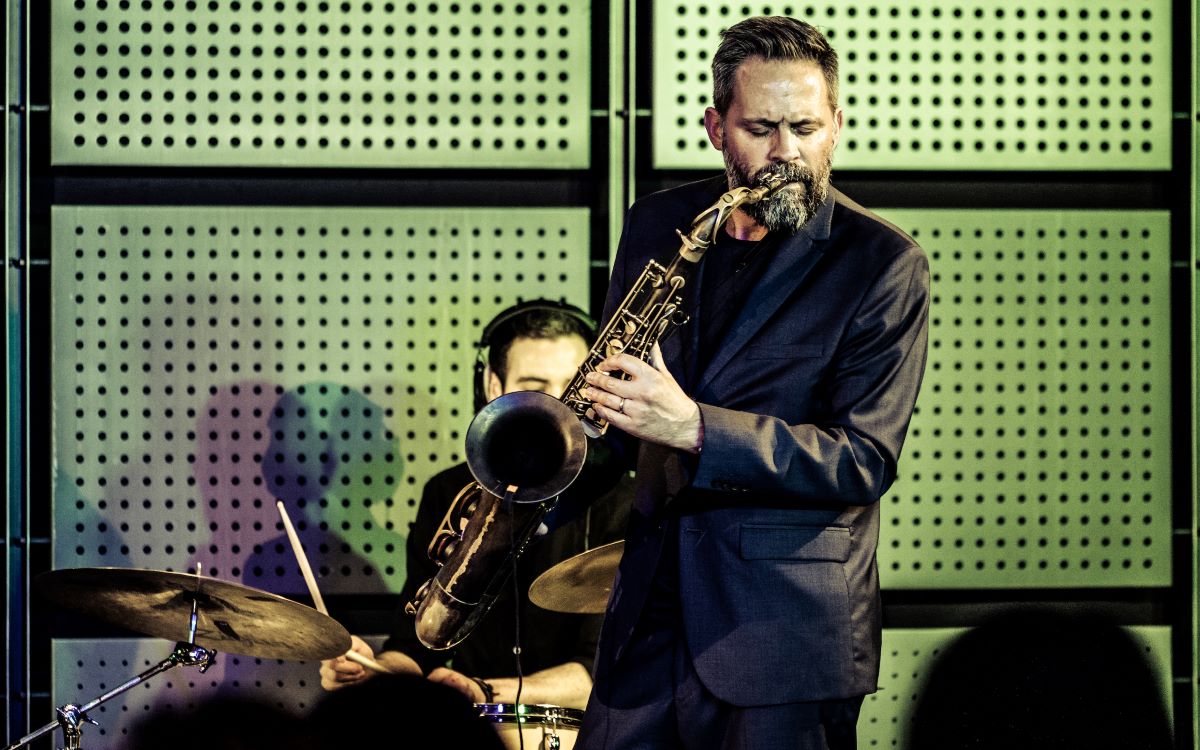
Ulrich’s musicianship runs like a thread through his life. It is not a past, it is a tool. He says: “I do exactly the same thing in ONA as I do in music. I compose systems. Just in a different context.”
Music, he explains, is a permanent work with unknowns. You know the theory. You know your instrument. But you never know what a new piece will sound like in the end. And that’s exactly how ONA works.
Ulrich brings music with him:
- thinking in interrelated systems
- the ability to interweave variables
- the patience to try things out instead of controlling them
- Passion as the driving force behind creative processes
Ulrich has learned to understand structures in order to consciously forget them and create space for something new. He is now implementing this principle on a grand scale.
Between vision, doubt and courage
With a project like ONA, you might expect it to be all about technology, budgets and strategies. But when you talk to Ulrich, it’s clear that his most important tool is listening.
“I simply love listening to my environment and people, observing them, learning from them and comparing the impressions I gain with my own concepts.”
Ulrich Drechsler
Ulrich impressively describes how people from different disciplines work with different tools. His learnings come from comparing ways of thinking, open exchange and exploring the interfaces. He learns from entrepreneurs, strategists and researchers, and they in turn learn from him. There are many hurdles in the project. But giving up would be the easiest thing to do. What keeps him going is the shared vision, the curiosity, the trust in collaborative work and the desire to create real working examples of cooperation. ONA is one of several projects Ulrich is working on, including extremely large, socially relevant projects. But they all have the same core: understanding and rethinking systems. And to compose systems like music.
How does Ulrich see the future?
For Ulrich, the future is not a place to park ideas. Rather, it is about making decisions today that set things in motion. “Now, in this moment, we are starting to set something in motion that may one day become a functioning model of cooperation.” He also asks the question that he believes we should all be asking ourselves. This question is his driving force, his compass:
“What would become possible if we put everything we have into everything we could do?”
Urlich Drechsler
Impulses and learnings for your own creative path
Ulrich’s story shows how much is possible when you look beyond the boundaries of your own discipline. Creatives have a unique way of thinking and this is needed. Interdisciplinarity is not a trend, but a necessity. The courage to “freeze” something can bring new life. Listening is an underestimated talent. Visions need spaces, but above all they need people. ONA is a space that is just emerging. And Ulrich is a creative who shows that creativity does not end where technology begins.
If you’re now keen to delve deeper, it’s worth taking a look at the ONA website (Opens in a new tab or window). Ulrich is always looking for people from a wide range of disciplines, visionaries, bridge builders, creative minds, science and technology enthusiasts and anyone who is curious enough to take the next step together.
More about the Orbital Nation Association:
You can also find Ulrich Drechsler on LinkedIn (Opens in a new tab or window) and Instagram (Opens in a new tab or window).