
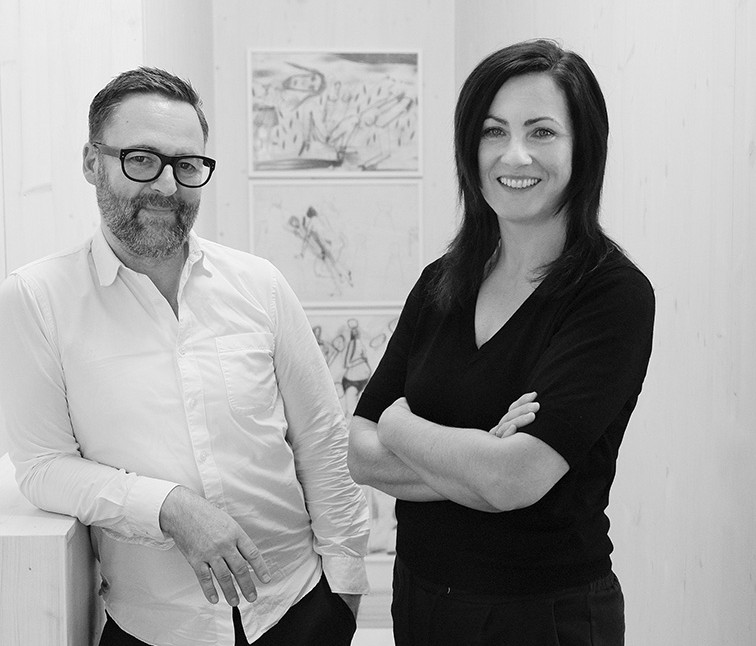
Andreas Volleritsch & Michaela PerneggerGo Out to Discover Where You Want to Go
These two creative minds don’t just design magazines and visual worlds in the Almtal—with Casa Nero, they also create spaces for tranquility, nature, and new ideas.
Andreas Volleritsch and Michaela Pernegger have stopped thinking of design solely in terms of projects. The two creatives’ journey has taken them from agencies and publishing houses, through the founding of neubaudesign.com, all the way to the Almtal region in Upper Austria. There, they now design not only editorial projects but also spaces for tranquility, new perspectives, and plenty of great ideas.
The Difference Between Generating Ideas and Having Ideas
Art Direction, Creative Direction, agencies, publishing houses, Vienna, Hamburg. Andreas Volleritsch and Michaela Pernegger knew the creative industry from the inside. Michaela worked as an art director at a large agency, while Andreas served as an art and creative director at publishing houses in Vienna and Hamburg. Ideas were just as much a part of the job as deadlines. At some point, they realized that producing ideas isn’t necessarily the same as coming up with your own. So the two did something that hadn’t been on their agenda amid the fast-paced daily routine of the creative world: they walked away.
They quit their jobs, packed their bags, and drove across Europe for five months. No meetings, no briefings—just the Atlantic coast, the Mediterranean, forests, exercise, and plenty of time.
“We knew how to come up with ideas. But at some point, we realized there’s a difference between coming up with ideas and actually having them,” recalls Andreas.
The trip became a turning point. Although they didn’t come up with one big business plan along the way, both experienced what happens when there’s suddenly room again for observations, thoughts, and their own ideas.
A trip becomes a working model
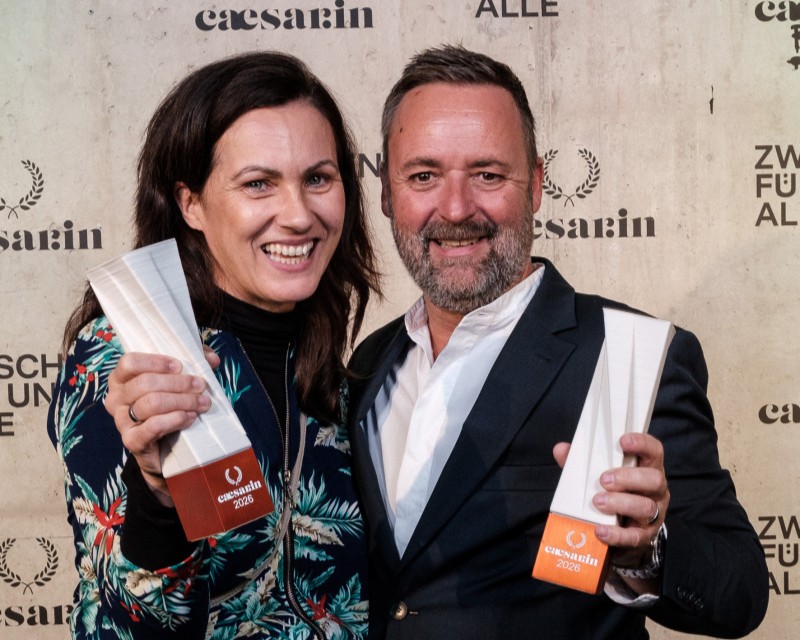
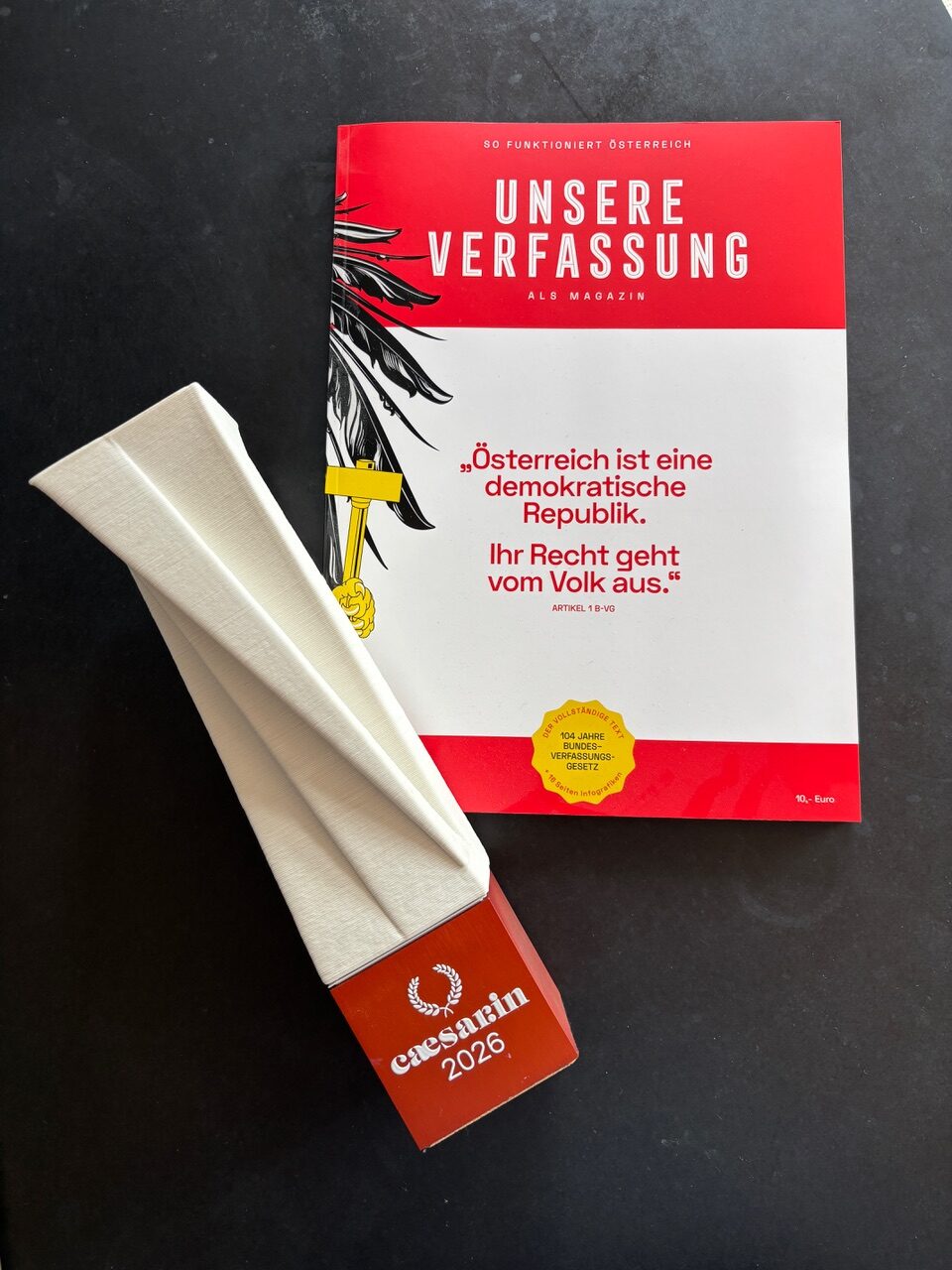
Back in Hamburg, Andreas and Michaela drew conclusions from this experience. In 2003, they co-founded neubaudesign.com and have been developing design and editorial projects ever since. The fact that design for them doesn’t end with a traditional commission is also evident in their own publishing formats. Some of their projects translate complex content into magazines that are not merely intended for the moment. Rather than reacting as quickly as possible to the next trend, the two are interested in the question of which content deserves a form that endures. For one such project (“Our Constitution as a Magazine”), they were recently awarded the Ceasar by the Upper Austrian Chamber of Commerce.
This shift in perspective is interesting for anyone working in the creative industries. It shows that one’s own distinctive style can emerge precisely when you don’t just meet expectations, but decide for yourself which topic, form, and approach you find important. For Andreas and Michaela, this has evolved over the years into more than just a way of working. Design is increasingly permeating various areas of life. The boundaries between creative professions, entrepreneurship, and personal interests are becoming more permeable.
Move to where your thoughts take shape
In 2021, Andreas and Michaela will make Upper Austria their home. For Michaela, this means a return home. She grew up in the Almtal, and her family and part of her history are rooted here. But for both of them, the region has also long been a place of retreat—a place they came to when they needed some distance and space to clear their minds.
At some point, they ask themselves why they always retreat there when they could just as easily live there. With Casa Nero, another collaborative project is finally taking shape in the Almtal. They’re setting up a small B&B in their own home and a tiny house on the property, surrounded by forest and nature. But the shift from editorial design to breakfast, guests, and a tiny house isn’t as radical as it sounds at first.
Isn’t hospitality also a form of design?
Of course, the new project comes with responsibilities that aren’t listed in any art direction job description. Suddenly, breakfast has to be ready in the morning, while at the same time a deadline is looming at the design studio. Two creatives find themselves in the role of hosts and have to learn a lot from scratch. At the same time, they discover a surprising number of parallels.
After all, design begins even before type, color, or paper come into play. How does a space feel? What does a person need to feel at home? What can be left out? Which detail changes how we perceive a space? And how do you create an atmosphere that doesn’t constantly demand attention? What Andreas says about hospitality could just as easily be a definition of good design: understanding what people need before they even know it themselves.
As a result, Andreas and Michaela have shifted from being designers to being hosts. Rather, they have broadened their understanding of what can actually be designed. Today, it’s not just magazines and visual worlds, but also spaces, stays, and experiences.
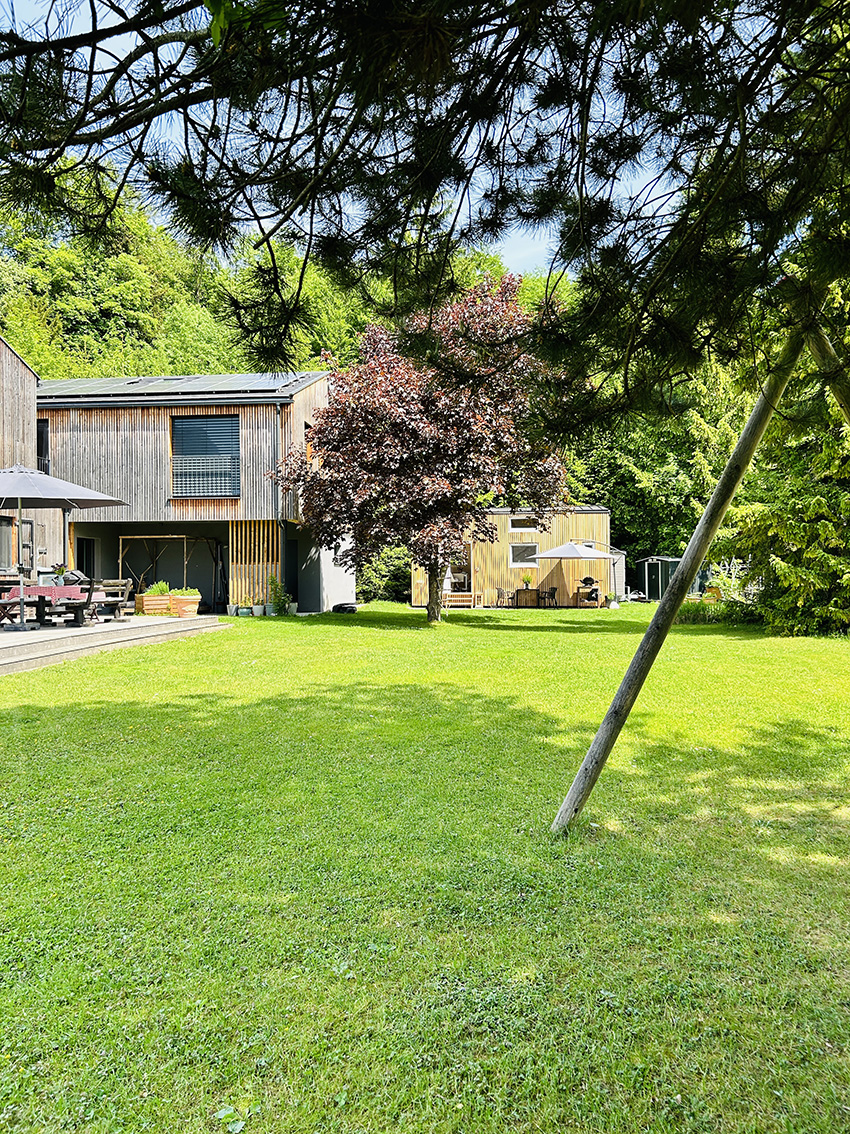
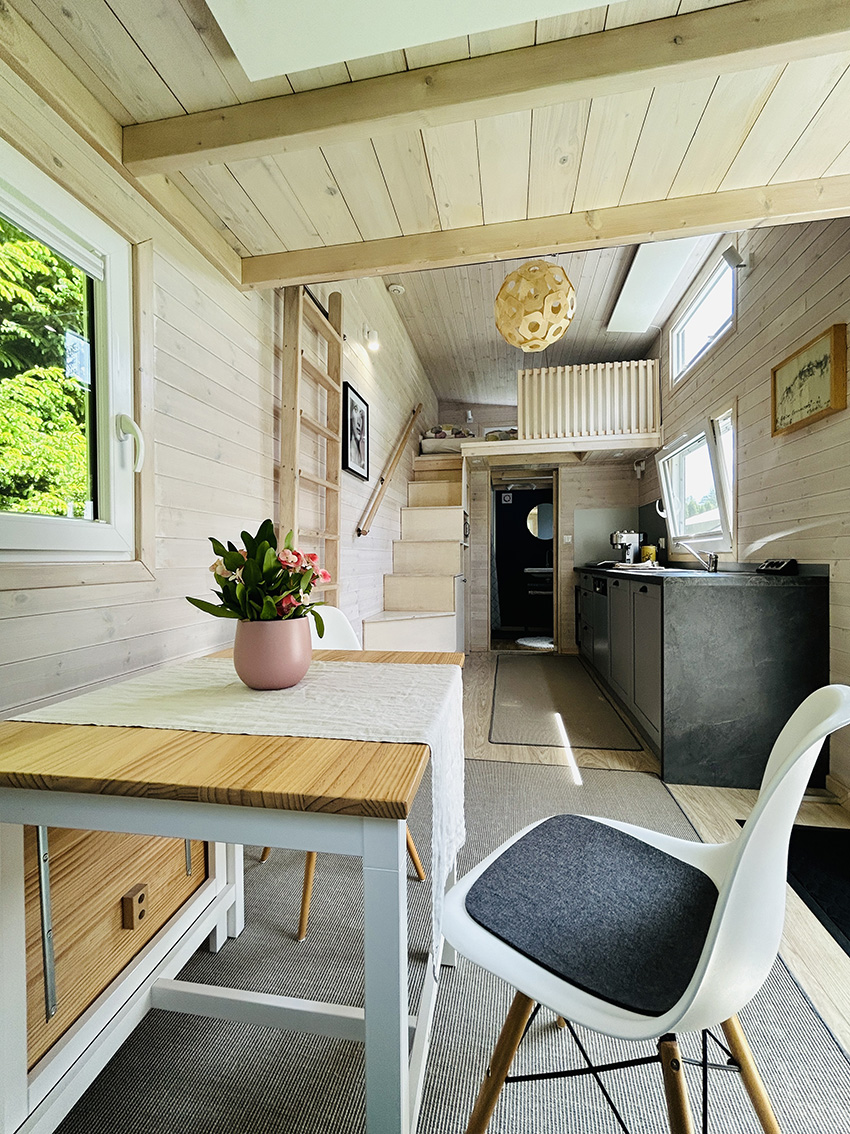
Here, what seems like very little suddenly turns into more
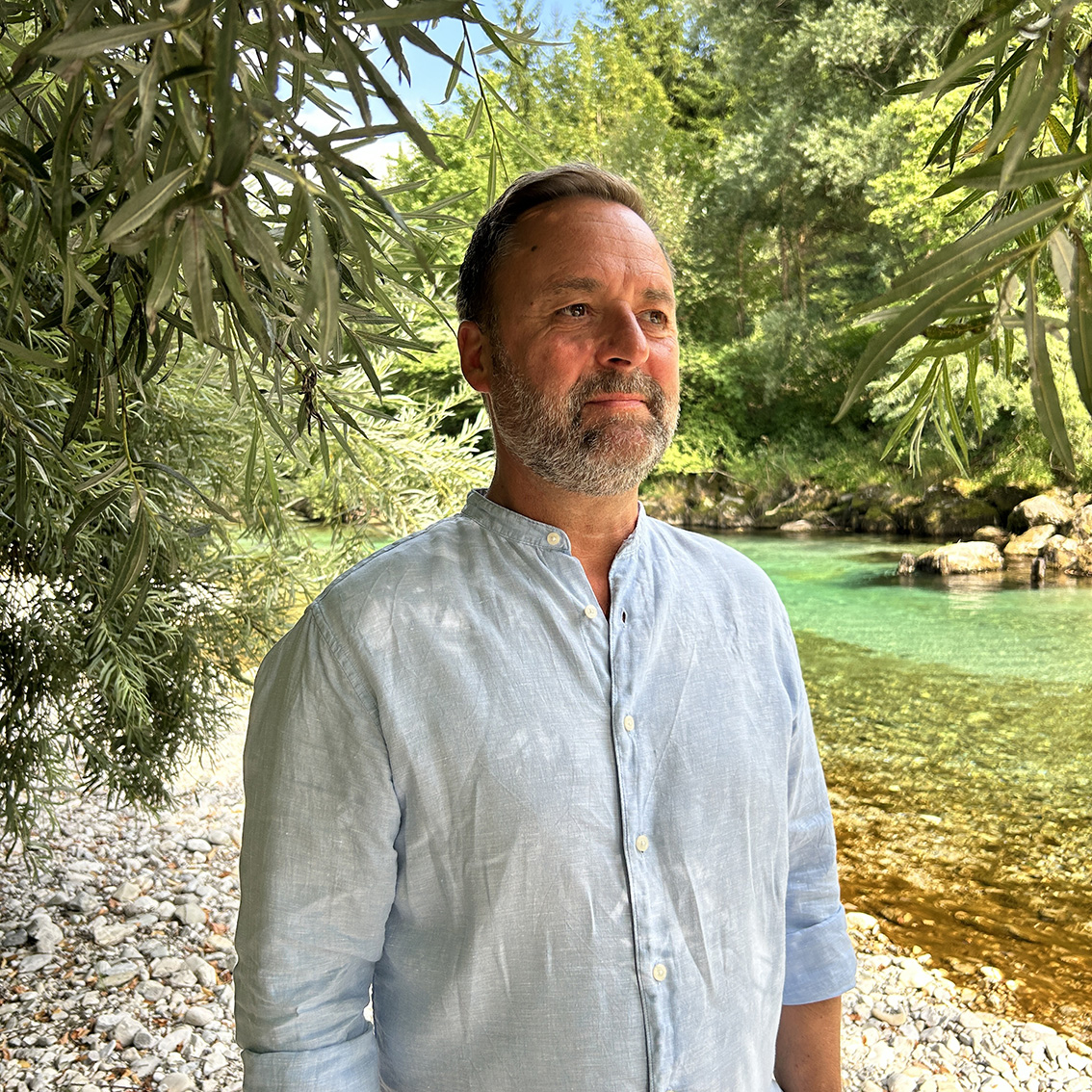
Andreas brings yet another perspective to the table. He is a hunter and a certified forest bathing instructor. He doesn’t view these activities as distinct roles either. Being in the forest is about observing, being still, and waiting—about paying attention without expecting an immediate result. These are skills that can be surprisingly valuable in everyday creative work, yet are quickly lost when every spare minute vanishes amid emails, calls, pitches, and project plans. This is where the Forest Creative Reset comes in, which guests can book at Casa Nero. The idea behind it is pleasantly unspectacular: not more input, but fewer distractions.
The tiny house, the forest, the river, the silence. No upcoming presentation that needs to be polished. No screen demanding your attention yet again. For creative people who are used to constantly producing output, this apparent lack of purpose can feel unfamiliar—and yet be more productive than it first appears.
Creativity doesn’t fit into a single job title
If you follow Andreas and Michaela’s paths, you’ll notice that a creative career doesn’t have to follow a straight line—and it certainly doesn’t have to be defined by the same job title forever. Editorial designer, agency owner, publisher, host, hunter, or forest bathing instructor. On paper, this looks like a lot of different roles. In practice, however, the same skill can underlie attentive observation, recognizing connections, and designing something in such a way that it creates a new experience.
For the two of them, moving to the Almtal was therefore an expansion of their creative playground. Perhaps there’s a useful lesson here for anyone who’s currently sitting in front of a blank screen, desperately waiting for the next idea. Not every creative block requires a new tool, another mood board, or the next workshop. Sometimes it just takes some distance, movement, and a different perspective—or, as Andreas puts it: “Sometimes you have to step outside to figure out where you want to go.”