

And suddenly it went woom
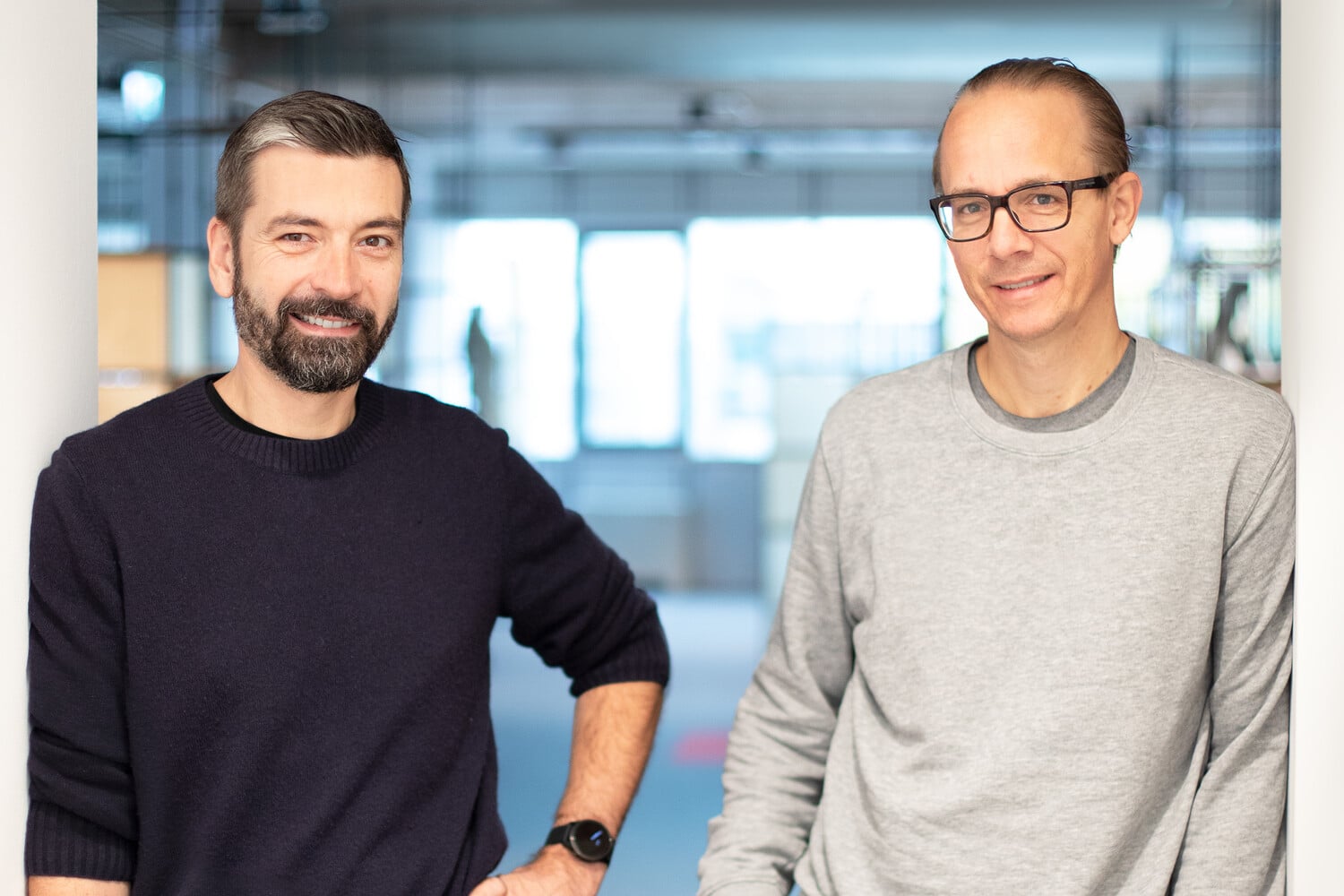
Cycling can be child’s play. If the saddle is correctly adjusted, the grips fit small hands and the bike is not too heavy. With woom, Christian Bezdeka and Marcus Ihlenfeld have developed children’s bikes that take the needs of people aged 1.5 to 14 into account.
“Innovation in the bike sector is focused exclusively on the top-class sports segment,” Christian Bezdeka recalls the initial situation. “The next step was to transfer technical innovations to high-priced bikes.” A few years later, the innovations would also reach all-round bikes. Children’s bikes were largely excluded from innovations.
The best children’s bikes in the world
It stayed that way until 2013. Then it literally went woom. At the time, industrial designer Christian Bezdeka was working for international companies and developing products for children and the bicycle industry, among others. By chance, he met Marcus Ihlenfeld, a congenial partner, as it turned out, because he had management experience from the automotive industry. “I certainly couldn’t have done it on my own,” says Bezdeka, emphasizing the importance of a functioning team in which skills complement and reinforce each other. The chemistry was also right. Both were “bike nuts”, looking for suitable bikes for their children and willing to invest time and expertise in a new generation of children’s bikes. In fact, they wanted them to be the best children’s bikes. The fact that they are called woom is thanks to the son of the company founder, who condensed his enthusiasm for the wind and speed into one word.
“When our children were in bed, we tinkered with the prototype at night,” says Bezdeka. He also recommends the motto “Build prototype fast” to all other start-ups: “It pays to launch a trial balloon on a small scale, learn and see that the learning curve is steep.”
From Klosterneuburg to the whole world
The first 50 bikes, which were built in a garage in Vienna, immediately sold like hot cakes. Banks and the bicycle industry were skeptical and turned down inquiries from the woom founders. However, the aws impulse XL grant made it possible to finance the next step. Bezdeka and Ihlenfeld moved to Klosterneuburg and built 500 of them. These were also sold out in no time and the enthusiastic parents continued to tell the story of the high-quality children’s bike.
woom picked up speed. The recommendation marketing worked and production grew. Initially, the bikes were sold exclusively via the online store, but as more and more customers asked for the high-quality children’s bikes, the stationary trade followed suit. In Austria, in Europe, in the USA. There are now over 500,000 woom bikes on the road worldwide and the company continues to grow.
When asked about the recipe for success, Christian Bezdeka replies: “A good bike is a composition of many good details. We provide people with good arguments so that they are prepared to spend more money on high-quality products.” Good details. These include green and black brake levers, for example, so that children who are not yet able to distinguish between left and right can press the brakes in good time. Or the low weight, which makes cycling easier for children and reduces the burden on parents. And many other subtleties that are optimally adapted to the different needs, arm and leg lengths of people between one and a half and 14 years of age and make cycling child’s play.
Modern classic
The bikes, which are currently manufactured in Cambodia, Taiwan, Bangladesh and Poland, are now available as all-round models for city and mountain tours. “Seven versions have been developed so far, but the bike has remained the same on the outside,” says Christian Bezdeka, describing one of the brand’s characteristics. Instead of pink and short-term trends, the design of the bikes and accessories focuses on timeless aesthetics, rich, cheerful colors and durability. This is also reflected in the upCycling membership: anyone who returns a bike that has become too small and buys a larger one receives 40 percent of the original purchase price back. And a look at online platforms shows that used woom bikes are traded at almost new prices because the materials and components meet the idea of “indestructible”.
“We have developed something of a modern classic,” says Christian Bezdeka, summarizing the work of a decade. He and co-founder Marcus Ihlenfeld recently retired from the operational business and entrusted the management to a new generation. “At a higher altitude”, they are still there for the woom team and are working on plans for the further development of the brand.